TX is widely used to enable the circulation of real-world assets (RWAs) within blockchain systems. This process goes far beyond a simple technical conversion; it requires a complex, multi-stage system engineering approach. From the moment an asset enters the network to the completion of a transaction, the system must establish a reliable connection between off-chain and on-chain environments, ensuring that asset status, ownership, and transaction records remain consistent throughout. Understanding this end-to-end process is essential for grasping how the RWA mechanism truly functions at a systemic level.
TX Operational Framework: A Closed-Loop Structure Integrating On-Chain and Off-Chain Systems
TX does not operate as a single on-chain logic, but as a closed-loop system composed of both off-chain asset management and on-chain state mechanisms. Off-chain operations ensure the authenticity and control of assets, while on-chain processes handle status recording and circulation logic. These two layers are connected via mapping relationships, enabling assets to maintain consistency across both systems.
When a real-world asset enters this system, its status shifts from a traditional financial “account record” to a blockchain “transferable state unit.” This transformation unfolds gradually through multiple stages, each with a specific function, ultimately shaping a complete asset lifecycle.
Asset Custody and Verification: From Real-World Assets to Mappable Digital States
Before an asset can be brought on-chain, it must undergo custody and verification. The primary objective here is to guarantee the asset’s authenticity, uniqueness, and controllability. Since real-world assets cannot reside directly on a blockchain, regulated institutions provide custody services to create a trusted foundation.
During this stage, the asset is locked within the custody structure, restricting its liquidity but qualifying it for on-chain mapping. The system verifies ownership and compliance to prevent double issuance or fraudulent assets.
Once this step is complete, the asset transitions from a physical entity to a digitally expressible object, paving the way for tokenization.
Token Generation and On-Chain Mapping: How Assets Gain Blockchain Representation
After custody is complete, the system initiates on-chain mapping. In this phase, the real-world asset is converted into an on-chain token—representing an ownership claim rather than the asset itself.
The blockchain system generates corresponding records detailing asset quantity, unit structure, and mapping rules. Token creation is both a technical process and a fundamental redefinition of asset status, allowing the asset to be identified and transferred within the blockchain environment.
Once mapping is complete, the asset takes on a new digital form, shifting from a static object to a liquid, tradable digital unit. This enables the asset to enter the market and participate in subsequent transactions.
On-Chain Trading Mechanism: How Assets Circulate in the System
With the asset now tradable, TX’s core function becomes asset circulation. On-chain trading eliminates the need for traditional intermediaries; asset transfers are executed and recorded directly via blockchain logic.
When a user submits a trade request, the system verifies their asset status to ensure sufficient token balance. The relevant assets are temporarily locked to prevent double-spending. Upon execution, assets transfer from one address to another, and ownership records are updated accordingly.
As trading activity increases, a market takes shape, and asset prices adjust dynamically based on supply and demand. This evolution transforms assets from static representations into actively traded market instruments.
Continuous trading not only alters asset ownership but also drives liquidity formation—the ability to buy or sell assets at low cost, which is vital for market activity.
In the TX framework, liquidity is cultivated as trading volume and participation grow. As more users engage and trading frequency increases, prices stabilize, and a robust market structure emerges.
The foundation of this stage is the stability and transparency of the trading mechanism. On-chain records make every transaction traceable, ensuring unified market behavior and clear price signals.
Settlement and State Updates: Completing and Confirming Transactions
Unlike traditional finance, where trades require separate clearing and settlement steps, the TX system synchronizes trading and settlement.
Once a transaction is confirmed on-chain, asset status updates instantly: the buyer receives the asset, the seller receives compensation, and ownership records are updated in real time. This synchronous update minimizes intermediaries and ensures rapid reflection of trade outcomes within the system.
Settlement revolves around finality—once a transaction is recorded on-chain, it is considered immutable. This feature enhances certainty in status confirmation and mitigates risks associated with delayed settlement.
Structural Differences: TX vs. Traditional Financial Processes
As covered above, the TX process—from asset custody and on-chain mapping to trading and settlement—forms a complete closed loop. To fully appreciate its features, it’s important to compare it with traditional financial systems. Rather than simply replicating legacy processes, TX restructures key steps at a fundamental level.
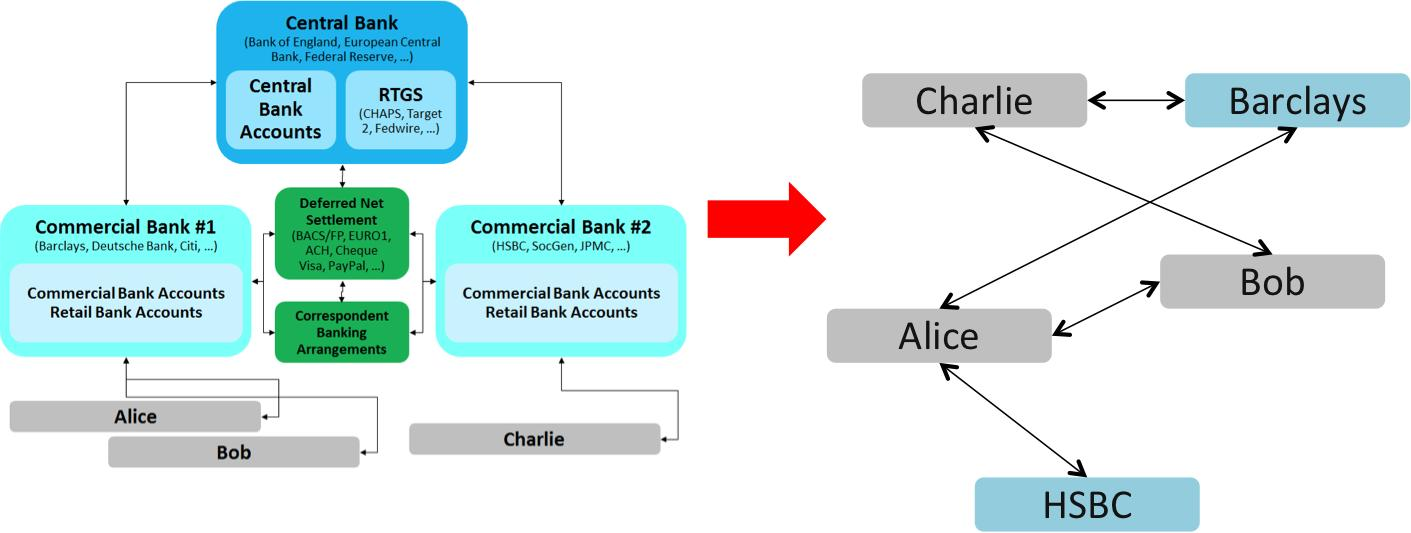
In traditional finance, assets exist as account entries, trades are matched and cleared via intermediaries, and there are delays between trade execution and settlement. In the TX system, assets exist as on-chain tokens, trades are executed directly via blockchain logic, and settlement and state updates occur nearly simultaneously. These differences are both technical and structural, redefining the asset lifecycle.
Here’s a structural comparison across several dimensions:
| Process Dimension |
TX System |
Traditional Financial System |
| Asset Entry |
Custody, then token mapping |
Account registration |
| Asset Form |
On-chain token |
Account balance |
| Trade Execution |
Direct on-chain transfer |
Intermediary matching |
| Settlement Logic |
Trade equals settlement |
Trade and settlement separated |
| Status Update |
Real-time on-chain |
Delayed update |
| System Architecture |
On-chain + off-chain collaboration |
Centralized system |
As shown, TX fundamentally restructures traditional processes: asset representation shifts from accounts to tokens, trading moves from intermediaries to direct on-chain execution, and settlement becomes synchronous rather than phased.
These innovations deliver new efficiencies and transparency, but also require careful balance between blockchain mechanisms and real-world compliance.
Core Mechanisms in TX Operation: Mapping, Synchronization, and Compliance
Supporting the entire process are foundational mechanisms that ensure system stability.
The asset mapping mechanism maintains a one-to-one relationship between on-chain tokens and real-world assets, grounding the system in real-world value. State synchronization ensures that blockchain records precisely reflect asset changes, preventing discrepancies. Compliance mechanisms constrain asset issuance and transfer, preserving system stability across jurisdictions.
These mechanisms are interwoven across all phases, enabling seamless transitions and robust operation.
Conclusion: How TX Enables Complete On-Chain Asset Flows
TX can be viewed as a continuous, multi-stage process: assets are first entrusted to custody for verifiable backing, then tokenized for blockchain representation, circulated through on-chain trading, and finally settled with status confirmation.
This closed-loop structure enables real-world assets to be represented and transferred within blockchain ecosystems. Rather than simply replacing traditional finance, TX offers a fundamentally new pathway for asset expression and transfer.
FAQ
Does TX rely entirely on blockchain? No; custody and verification typically occur off-chain, while on-chain systems handle state recording and trading.
Why is asset custody required? Real-world assets cannot exist natively on-chain; regulated custodians ensure their authenticity and control.
Are tokens equivalent to the actual asset? Tokens usually represent rights to the asset, not the physical asset itself.
Can TX achieve instant settlement? Most systems approach real-time settlement, but timing depends on design specifics.
Why are trading and settlement unified? Blockchain systems can update asset status simultaneously with trade recording, reducing the need for separate clearing.
Is the TX process standardized? The core logic is generally applicable in RWA systems, though implementations may differ by project.







