
Futures
Access hundreds of perpetual contracts
TradFi
Gold
One platform for global traditional assets
Options
Hot
Trade European-style vanilla options
Unified Account
Maximize your capital efficiency
Demo Trading
Introduction to Futures Trading
Learn the basics of futures trading
Futures Events
Join events to earn rewards
Demo Trading
Use virtual funds to practice risk-free trading
Launch
CandyDrop
Collect candies to earn airdrops
Launchpool
Quick staking, earn potential new tokens
HODLer Airdrop
Hold GT and get massive airdrops for free
Launchpad
Be early to the next big token project
Alpha Points
Trade on-chain assets and earn airdrops
Futures Points
Earn futures points and claim airdrop rewards


More




#创作者冲榜
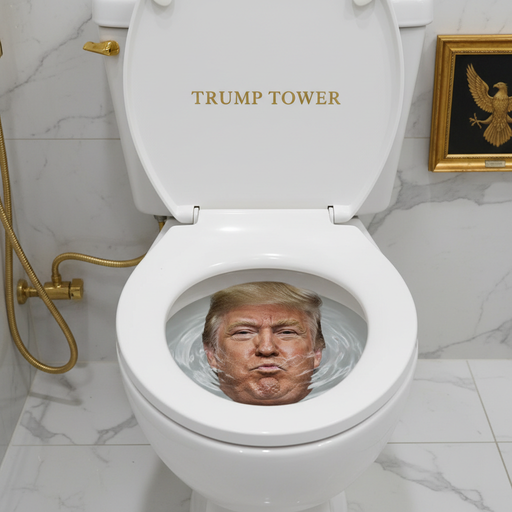
Strategic De-Escalation Shock: Trump–Iran Ceasefire Signals Ignite Safe-Haven Rally as Gold Skyrockets $156 🔥
The sudden shift toward de-escalation between Donald Trump and the leadership of Iran represents a powerful geopolitical pivot that has immediately reshaped global market sentiment, triggering a sharp and aggressive reaction across safe-haven assets, most notably gold, which skyrocketed by an extraordinary $156 in a very short span of time. This type of price movement is not random or purely speculative; it reflects a rapid repricing of geopolitical risk, where markets are forced to adjust expectations in real time as uncertainty shifts from escalation toward fragile stability. When a potential conflict scenario transitions into ceasefire signals, the immediate assumption might be reduced risk, but in reality, such transitions often create a different kind of uncertainty, one that drives capital into assets perceived as stable stores of value while investors reassess the durability and credibility of the agreement.
At the core of this reaction is the role of gold as a global safe-haven asset, which historically responds not only to active conflict but also to uncertainty surrounding political decisions, diplomatic developments, and the potential for sudden reversals. The magnitude of the $156 move indicates that the market was previously positioned for continued tension or escalation, and the unexpected nature of the ceasefire signal forced a rapid adjustment in positioning. Traders and institutions who were either hedging risk or speculating on further instability had to react quickly, leading to a surge in demand that pushed prices sharply higher. This kind of move often reflects a combination of short covering, new inflows, and momentum-driven buying, all of which amplify price action in a compressed time frame.
Beyond gold, the broader financial landscape is also influenced by such geopolitical developments, as shifts in risk perception lead to capital rotation across multiple asset classes. Equity markets may initially react positively to the idea of reduced conflict risk, but this optimism is often tempered by uncertainty about the long-term implications of the ceasefire and whether it represents a lasting resolution or a temporary pause. Currency markets can also experience significant movement, particularly in relation to the US Dollar, which tends to strengthen or weaken depending on how investors interpret the balance between risk and stability. The interplay between these markets creates a dynamic environment where capital is constantly adjusting to new information and evolving expectations.
Another critical dimension of this development is the psychological impact on market participants, as sudden geopolitical shifts can alter sentiment very quickly, forcing traders to reassess their assumptions and reposition accordingly. Confidence, fear, and uncertainty all interact in complex ways, and even a positive signal such as a ceasefire can generate volatility if it challenges previously held expectations. Markets do not move based on events alone; they move based on how those events compare to what was anticipated, and in this case, the scale of the reaction suggests that the ceasefire signal was either unexpected or not fully priced in.
From a strategic perspective, the key question is not just why gold reacted so aggressively, but what comes next, as markets attempt to determine whether this move represents the beginning of a sustained trend or a short-term reaction to a specific event. If the ceasefire holds and leads to broader diplomatic progress, some of the safe-haven demand may gradually unwind, leading to stabilization or even correction in gold prices. However, if uncertainty persists or if there are doubts about the durability of the agreement, gold could maintain elevated levels or continue to attract inflows as a hedge against potential instability. The outcome depends on how credible and sustainable the de-escalation process proves to be over time.
Ultimately, this event highlights the sensitivity of global markets to geopolitical developments and the speed at which capital can move in response to changing narratives. The dramatic move in gold is not just a reaction to a single headline but a reflection of deeper market dynamics, where risk, uncertainty, and opportunity are constantly being reassessed. For investors and analysts, understanding these dynamics is essential, as it allows for more informed decision-making in an environment where geopolitical signals can rapidly influence financial outcomes across multiple sectors.