BeautifulDay

vip
Age 1.7 Year
Peak Tier 5
No content yet
The rsETH exploit has become one of the most defining stress tests for modern DeFi, exposing how fragile cross-chain infrastructure can be—and how powerful coordinated response can become when the system is pushed to its limits.
At the center of the incident is KelpDAO and its rsETH token, where a critical weakness in bridge verification allowed hundreds of millions in unbacked assets to be minted. This wasn’t a simple smart contract bug. It was a structural failure in how cross-chain truth was validated.
The use of a single verifier setup created a point of failure that sophisticated attacker
AAVE0.03%
Yusfirah
#rsETHAttackUpdate
The KelpDAO rsETH exploit that occurred on April18,2026, represents a watershed moment in decentralized finance, exposing critical vulnerabilities in cross-chain infrastructure while simultaneously demonstrating the industry's capacity for coordinated crisis response. This incident, which resulted in approximately $292 million in unbacked rsETH tokens being minted and deployed across multiple lending protocols, demands thorough examination from technical, economic, and systemic perspectives.
**Technical Architecture of the Exploit**
The attack targeted the fundamental verification mechanism of KelpDAO's LayerZero-powered bridge infrastructure. KelpDAO's rsETH OFT Adapter on Ethereum was configured with a1-of-1 Decentralized Verifier Network setup, meaning LayerZero Labs served as the sole entity responsible for verifying cross-chain messages. This configuration, while simplifying operations, created a single point of failure that proved catastrophic.

The attacker's methodology reveals sophisticated understanding of blockchain infrastructure vulnerabilities. First, the attacker obtained the list of RPC nodes used by the LayerZero Labs DVN. Then, they compromised two of these nodes by replacing the legitimate op-geth binaries with malicious versions that served forged data exclusively to the DVN's IP addresses while appearing honest to all other observers. This selective poisoning allowed the malicious nodes to maintain the appearance of legitimacy while feeding false information to the critical verification infrastructure.
The final phase involved a coordinated DDoS attack against the remaining clean nodes, forcing a complete failover to the compromised infrastructure. With the poisoned nodes as the only available option, the attacker submitted a forged cross-chain message claiming to originate from KelpDAO's Unichain deployment. The DVN confirmed this message against its fabricated view of on-chain state, the2-of-3 multisig quorum passed, and the forged packet was certified as valid, triggering the release of116,500 rsETH to the attacker-controlled address.
**The Contagion Mechanism**
What distinguishes this exploit from simpler bridge hacks is the sophisticated use of DeFi composability to amplify damage. Rather than attempting to sell the stolen rsETH on open markets, which would have crashed the token price and limited the attacker's gains, the perpetrator instead deposited the unbacked tokens as collateral across multiple lending protocols. This strategy allowed the extraction of real value from the ecosystem while leaving behind toxic debt.
The attacker deposited89,567 rsETH as collateral on Aave V3, borrowing approximately $190 million in WETH and wstETH. Additional deposits were made to Compound V3, Euler, and other lending venues. This approach exploited a fundamental asymmetry in DeFi lending: the protocols accepted rsETH as collateral at its face value, but the tokens were actually unbacked and essentially worthless. The result was the creation of bad debt that now sits on these protocols' books, with the borrowed ETH representing real value extracted from depositors.
**Economic Impact Assessment**
The financial ramifications extend far beyond the initial $292 million exploit value. Aave alone faces modeled bad debt scenarios ranging from $123.7 million under uniform depeg assumptions to $230.1 million under Layer2 isolation scenarios. The protocol's WETH pools now hold approximately $177 million in bad debt, representing ETH borrowed using stolen rsETH as collateral. This debt is fixed in ETH terms while the collateral has collapsed in value, creating an unresolvable imbalance without external intervention.
The broader DeFi ecosystem experienced significant contagion effects. Aave's Total Value Locked dropped from approximately $22 billion to $15.4 billion within48 hours, representing a30% decline as depositors rushed to withdraw funds. Over $7 billion in assets fled from leading protocols, with Aave alone seeing $6.2 billion in outflows. The AAVE token declined by roughly11%, while rsETH itself trades at a significant depeg, fluctuating between $1,680 and $2,250 across various exchanges compared to its intended ETH peg.
Lido's EarnETH vault disclosed indirect exposure of approximately $21.6 million in rsETH-related strategy risk, representing roughly9% of the vault's total assets. This revelation highlights how the interconnected nature of DeFi strategies can transmit risk across seemingly independent protocols.
**The DeFi United Response**
The industry's response to this crisis has been both unprecedented and instructive. Aave has taken the lead in coordinating what has been termed "DeFi United," a collaborative recovery effort involving multiple major protocols. This initiative represents a significant evolution in DeFi governance, moving from isolated protocol responses to coordinated ecosystem-wide crisis management.
As of April25, Aave DAO has proposed contributing25,000 ETH from its treasury toward the recovery effort. This contribution, valued at approximately $65-70 million, aims to address the remaining shortfall of roughly75,081 ETH after accounting for existing commitments. Lido DAO has proposed contributing up to2,500 stETH, with multiple "strong indicative commitments" formalized from other ecosystem participants including EtherFi, Ethena, and the Mantle Network, which has provided a30,000 ETH credit facility.
The Arbitrum Security Council has frozen and transferred30,766 ETH worth approximately $80 million from an identified attacker address to secure custody, demonstrating that rapid governance action can partially mitigate damage even after sophisticated exploits.
**Attribution and Geopolitical Dimensions**
Chainalysis and LayerZero have attributed the attack to North Korea's Lazarus Group, specifically the TraderTraitor subgroup. This attribution adds a geopolitical dimension to the incident, highlighting how state-sponsored actors are increasingly targeting DeFi protocols as sources of funding for sanctioned regimes. The involvement of sophisticated nation-state actors represents an escalation in the threat landscape facing decentralized finance.
The attribution has also sparked controversy between KelpDAO and LayerZero regarding responsibility for the exploit. LayerZero maintains that the1-of-1 DVN configuration was KelpDAO's choice and not the recommended default, while KelpDAO contends that the compromised verifier was LayerZero's own infrastructure and that the configuration was LayerZero's onboarding default. This dispute underscores the complexity of assigning responsibility in interconnected DeFi systems.
**Systemic Implications for DeFi**
The rsETH exploit reveals several critical vulnerabilities in current DeFi architecture. First, the reliance on single-point-of-failure configurations in cross-chain bridges represents an unacceptable risk given the amounts at stake. The1-of-1 DVN setup that enabled this exploit should serve as a cautionary tale for all protocols utilizing cross-chain infrastructure.
Second, the attack demonstrates how DeFi composability, while enabling powerful financial primitives, also creates systemic risk transmission mechanisms. The ability to deposit collateral across multiple protocols and extract real value against unbacked assets creates amplification effects that can turn isolated incidents into ecosystem-wide crises.
Third, the incident exposes the limitations of current risk management practices in DeFi lending. The acceptance of rsETH as collateral with high loan-to-value ratios, without adequate consideration of bridge security risks, reflects a broader industry tendency to underestimate tail risks in pursuit of competitive yields.
**Lessons and Future Considerations**
The rsETH exploit will likely influence DeFi development for years to come. Several key lessons emerge from this incident:
Cross-chain infrastructure requires fundamentally different security assumptions than single-chain systems. The complexity of verifying state across multiple chains creates attack surfaces that sophisticated actors can exploit. Protocols must implement redundant verification mechanisms and avoid single points of failure in their bridge configurations.
Risk parameters for collateral assets must incorporate bridge security assessments. The current practice of treating bridged assets as equivalent to their native counterparts ignores the additional risks introduced by cross-chain infrastructure. Lending protocols should implement lower loan-to-value ratios and higher liquidation thresholds for bridged assets.
Real-time monitoring and invariant enforcement are essential for early detection of exploits. The rsETH attack could have been mitigated or prevented through continuous verification that tokens released on destination chains match tokens burned on source chains. Such monitoring systems should become standard for all cross-chain protocols.
The DeFi United response demonstrates that ecosystem coordination is possible and effective. While decentralized governance typically moves slowly, the crisis response has shown that protocols can coordinate rapidly when existential threats emerge. This capacity for collective action should be formalized through industry standards and mutual aid agreements.
**Conclusion**
The rsETH exploit represents both a failure and a success for decentralized finance. The failure lies in the inadequate security practices that allowed a sophisticated attacker to exploit fundamental vulnerabilities in cross-chain infrastructure. The success lies in the industry's ability to coordinate a response that may ultimately prevent the worst outcomes for users and depositors.
As the recovery effort continues and protocols implement lessons learned, the incident will likely be remembered as a turning point in DeFi's maturation. The transition from isolated protocols to an interconnected ecosystem brings both opportunities and risks, and the rsETH exploit serves as a stark reminder that security must evolve alongside complexity. The coming months will reveal whether the industry can translate these lessons into lasting improvements in cross-chain security and systemic risk management.
repost-content-media
  • Reward
  • 1
  • Repost
  • Share
ybaser:
To The Moon 🌕
The alleged insider trading case tied to United States Army personnel is exposing a new and uncomfortable reality: financial markets are no longer separate from national security.
At the center of the case is an accusation that a special forces operative used access to classified information linked to a covert mission involving Nicolás Maduro to place highly targeted bets on Polymarket. The outcome, according to prosecutors, was not speculation—it was certainty disguised as risk.
That distinction changes everything.
Prediction markets have often been framed as tools for collective intelligence
Yusfirah
#USMilitaryMaduroBettingScandal
US Military Insider Trading Scandal Rocks Prediction Markets as Special Forces Soldier Charged in Maduro Capture Betting Scheme
A major federal indictment has sent shockwaves through both military and financial circles this week after authorities arrested and charged U.S. Army Master Sergeant Gannon Ken Van Dyke, a 38-year-old special forces operative stationed at Fort Bragg, North Carolina, for allegedly exploiting classified military intelligence to execute a sophisticated insider trading scheme on cryptocurrency prediction markets. The charges stem from Van Dyke's alleged use of non-public information regarding Operation Absolute Resolve, the covert January 2026 mission that resulted in the capture of Venezuelan President Nicolas Maduro, to place winning bets totaling over $400,000 on the decentralized prediction platform Polymarket.
According to federal prosecutors from the Southern District of New York, Van Dyke allegedly began constructing his betting strategy on or around December 26, 2025, when he created a Polymarket account and initiated a series of long-shot wagers on outcomes directly tied to the classified military operation in which he was actively participating. The indictment details approximately thirteen separate bets totaling between $32,000 and $33,000, with positions taken on markets including whether Maduro would be removed from office by January 31, 2026, and whether U.S. military forces would enter Venezuelan territory. These positions, which represented highly speculative investments given the lack of public knowledge about the impending operation, yielded returns exceeding $400,000 once the raid was publicly announced and the prediction markets resolved in Van Dyke's favor.
The timeline presented by investigators paints a disturbing picture of calculated exploitation of privileged access. From December 8, 2025, through January 6, 2026, Van Dyke allegedly participated in both the planning and execution phases of Operation Absolute Resolve, giving him access to sensitive classified information regarding the timing, methodology, and objectives of the mission. Federal authorities contend that Van Dyke leveraged this insider knowledge to systematically place bets on Polymarket markets that were essentially guaranteed to resolve favorably once the operation became public knowledge. The indictment further alleges that Van Dyke took deliberate steps to conceal his identity as the trader behind these transactions, including allegedly requesting that Polymarket delete his account around January 6, 2026, falsely claiming he had lost access to the associated email address.
The military operation at the center of this scandal, Operation Absolute Resolve, was executed in early January 2026 when U.S. Special Forces conducted a raid on the presidential palace in Caracas, successfully extracting Maduro under heavy fire and transporting him to the USS Iwo Jima amphibious assault ship before his eventual transfer to New York to face federal drug trafficking charges. Van Dyke, who was photographed in military fatigues following the raid, had direct involvement in both the strategic planning and tactical execution of this high-stakes operation. The successful capture of Maduro, which represented a significant foreign policy development, triggered the resolution of multiple prediction markets on which Van Dyke had placed substantial positions.
Federal investigators were able to trace the suspicious trading activity through blockchain analysis and IP address correlation, ultimately linking the Polymarket account to Van Dyke's military service and classified access. The investigation, which had been ongoing for several months, culminated in Van Dyke's arrest on April 23, 2026, and the unsealing of a five-count federal indictment. The charges include wire fraud, theft of government property, and multiple counts related to the unlawful disclosure and misuse of confidential information. If convicted on all counts, Van Dyke faces a potential sentence of up to sixty years in federal prison. He was granted bond following his initial court appearance.
The case has drawn significant attention from the highest levels of government. When questioned about the arrest during an unrelated Oval Office event, President Donald Trump expressed unfamiliarity with the specific allegations but indicated he would look into the matter, notably commenting that he does not like the concept of betting and drawing a parallel to the Pete Rose baseball betting scandal. The President's remarks have added a political dimension to what is already a complex case involving national security, financial regulation, and military protocol.
Polymarket, the decentralized prediction platform that hosted the controversial bets, has sought to position itself as a victim rather than enabler of the alleged misconduct. In a public statement following news of the arrest, the platform characterized the federal charges as proof that their transparency tools and blockchain-based architecture actually facilitate the detection and prosecution of illicit activity. This defensive posture reflects the broader regulatory scrutiny facing prediction markets, which operate in a legal gray area between financial derivatives and gambling platforms.
The Van Dyke case represents the most significant enforcement action to date involving alleged insider trading on prediction markets, but it is not an isolated incident. Federal authorities previously charged two Israeli soldiers in February 2026 with similar offenses involving the suspected use of classified information to place bets on Polymarket. This pattern has raised serious concerns within both the military and financial regulatory communities about the vulnerability of prediction markets to exploitation by individuals with access to non-public information, particularly in areas involving geopolitical events, military operations, and national security matters.
Military officials and national security experts have expressed alarm at the implications of the scandal. The alleged conduct represents what multiple sources have characterized as a major breach of trust, compromising both operational security and the integrity of classified information protocols. The case highlights the growing intersection between traditional national security concerns and emerging financial technologies, as decentralized platforms create new vectors for potential exploitation of sensitive intelligence.
The legal proceedings are expected to move forward in the coming weeks, with prosecutors likely to present evidence detailing the blockchain transactions, classified information access logs, and communications that allegedly link Van Dyke to the betting scheme. The case is being closely watched by legal scholars, national security professionals, and cryptocurrency industry participants as it may establish important precedents regarding the application of securities and fraud laws to prediction market activity, as well as the obligations of military personnel participating in classified operations.
As this story continues to develop, questions remain about the adequacy of existing protocols for preventing conflicts of interest among military personnel with access to classified information, the regulatory framework governing prediction markets, and the broader implications for the intersection of national security and decentralized finance. The Van Dyke indictment serves as a stark reminder that even as financial technology evolves, the fundamental legal principles prohibiting insider trading and protecting classified information remain firmly in effect.
repost-content-media
  • Reward
  • 1
  • Repost
  • Share
ybaser:
To The Moon 🌕
The release of GPT-5.5 marks a clear shift in how artificial intelligence is being positioned — not just as a tool, but as a working system designed for real-world execution.
This is not just another version update.
It reflects a deeper transition from conversational AI to operational intelligence.
With improvements across reasoning, coding, research, and tool usage, OpenAI is pushing toward a model that can handle complex, multi-step workflows with minimal input. The focus is no longer on generating responses alone, but on completing tasks end-to-end with higher accuracy and efficiency.
What
Yusfirah
#OpenAIReleasesGPT-5.5
OpenAI has officially unveiled GPT-5.5, marking a significant leap forward in artificial intelligence capabilities. This release represents the culmination of extensive research and development, positioning the model as OpenAI's most intelligent system to date. The announcement came on April 23, 2026, with the company describing GPT-5.5 as faster, more capable, and specifically engineered for complex professional tasks including coding, research, and data analysis. The model is being marketed as a new class of intelligence designed for real-world work applications and agentic systems.
The availability of GPT-5.5 spans multiple platforms and user tiers. For ChatGPT subscribers, the model is rolling out to Plus, Pro, Business, and Enterprise users, with a specialized GPT-5.5 Pro variant available exclusively for Pro, Business, and Enterprise tiers. The API implementation offers two variants: gpt-5.5 and gpt-5.5-pro, both accessible through Responses and Chat Completions APIs since April 24, 2026. The API supports advanced features including prompt caching, hosted tools, tool search, compaction, and phase features inherited from GPT-5.4, all within an impressive one million token context window.
Pricing for the API tier reflects the model's enhanced capabilities. The standard GPT-5.5 is priced at five dollars per million input tokens and thirty dollars per million output tokens. The Pro variant commands a premium at thirty dollars per million input tokens and one hundred eighty dollars per million output tokens. Additional pricing tiers include batch and flex options at half the standard rate, and priority processing at two and a half times the base cost.
The technical improvements in GPT-5.5 are substantial and multifaceted. The model demonstrates exceptional proficiency in handling messy, multi-part tasks through advanced planning capabilities, tool utilization, self-checking mechanisms, and improved ambiguity handling with minimal guidance. In the coding domain, GPT-5.5 introduces agentic coding capabilities, enhanced debugging functionality, and UI generation features, with particular efficiency in the Codex environment. The research and analysis capabilities have been significantly expanded to include deeper online research, sophisticated data and spreadsheet operations, and comprehensive document creation.
Computer use and agentic functionality represent another major advancement. GPT-5.5 exhibits superior intent understanding, greater autonomy, and enhanced persistence when operating software and tools. Efficiency gains are notable, with the model matching GPT-5.4's latency while delivering superior intelligence and using fewer tokens. The underlying infrastructure leverages NVIDIA GB200 and GB300 hardware for optimized inference. The Pro variant specifically targets demanding professional tasks in business, legal, and data science domains, excelling in latency, accuracy, and structural coherence.
Benchmark performance validates these improvements. On Terminal-Bench 2.0, which tests agentic terminal tasks, GPT-5.5 achieved 82.7 percent compared to GPT-5.4's 75.1 percent. Software engineering capabilities measured by SWE-Bench Pro improved from 57.7 percent to 58.6 percent. Operating system interaction via OSWorld-Verified testing rose from 75.0 percent to 78.7 percent. Advanced mathematical reasoning on FrontierMath Tier 4 showed the most dramatic improvement, jumping from 27.1 percent to 35.4 percent, with the Pro variant reaching 39.6 percent. Biological reasoning on GeneBench increased from 19.0 percent to 25.0 percent. These results establish state-of-the-art performance on both the Artificial Analysis Coding Index and Intelligence Index.
Safety considerations have been addressed with OpenAI's strongest set of safeguards to date. The release includes sophisticated classifiers for cyber and biological risk assessment, extensive red-teaming protocols, and comprehensive partner feedback integration. While the model demonstrates high capabilities in cybersecurity and biology domains under the Preparedness Framework, these remain below critical thresholds requiring mandatory mitigation. Specific protective measures include Trusted Access protocols for cybersecurity applications and biological bug bounty programs offering rewards up to twenty-five thousand dollars. The model shows strong performance in preventing disallowed content generation, resisting jailbreaks, reducing hallucinations by three percent, providing appropriate health advice, and minimizing bias.
The development trajectory leading to GPT-5.5 is worth noting. There was no GPT-5.5 release in 2025; instead, GPT-5 launched on August 7, 2025, followed by iterative updates through versions 5.1 through 5.4 in early 2026. This systematic progression allowed OpenAI to refine capabilities and address limitations before the comprehensive 5.5 release. Users with qualifying subscriptions can access GPT-5.5 immediately through ChatGPT, experiencing firsthand the advancements in artificial intelligence that this model represents.
repost-content-media
  • Reward
  • 1
  • Repost
  • Share
ybaser:
To The Moon 🌕
Intel and Texas Instruments just reminded the market that the AI story is bigger than one company, and definitely bigger than GPUs alone.
This week’s earnings made one thing clear: the semiconductor cycle is shifting, and the benefits of AI infrastructure are spreading across the entire chip ecosystem.
Intel delivered a standout quarter that signals a real turnaround in progress. Revenue and earnings didn’t just beat expectations, they reset the narrative around the company. After years of doubt, execution is finally showing up in the numbers. Growth in server CPUs, strength in the foundry bus
Yusfirah
#IntelandTexasInstrumentsSurge
Intel and Texas Instruments Surge on Strong Q1 2026 Earnings
The semiconductor industry witnessed a remarkable week as two major chipmakers, Intel and Texas Instruments, delivered exceptional first-quarter 2026 results that sent their stock prices soaring and signaled a potential broadening of the artificial intelligence boom beyond graphics processing units.
Intel's Dramatic Turnaround
Intel reported first-quarter revenue of $13.58 billion, crushing Wall Street expectations of $12.36 billion. The company's adjusted earnings per share reached $0.29, a stunning beat compared to analyst estimates of just $0.01 and the company's own guidance of approximately breakeven. This represents a remarkable turnaround from the year-ago quarter when Intel posted a loss of $0.10 per share on sales of $12.86 billion.
The chipmaker's stock responded enthusiastically, surging 24% following the earnings announcement and surpassing its dot-com era record to reach an all-time high. The stock has now gained approximately 23% in April alone, reflecting renewed investor confidence in the company's turnaround under CEO Lip-Bu Tan.
Intel's guidance for the second quarter further bolstered optimism, with projected revenue between $13.8 billion and $14.8 billion and adjusted earnings per share of $0.20, both exceeding consensus estimates. The company attributed its strong performance to accelerating demand for server CPUs, with market unit growth expected to reach double digits through year-end.
A significant development emerged during Tesla's earnings call when Elon Musk announced that Tesla and SpaceX plan to use Intel's forthcoming 14A process technology at the Terafab semiconductor facility. This facility will produce chips for Tesla vehicles, robots, and orbital datacenters for SpaceX, representing a major validation of Intel's manufacturing capabilities.
Intel's foundry business showed particular strength, with revenue rising 16% year-over-year to $5.4 billion. The company has also secured investments from Nvidia and SoftBank totaling billions of dollars, further validating its manufacturing strategy. Additionally, Intel recently completed a $14 billion purchase of a 49% stake in its Ireland chip fab from Apollo Global Management, demonstrating confidence in its manufacturing expansion.
However, challenges remain. The company's Ohio chip fab project has been delayed until 2030, and some 18A process wafers continue to experience yield issues. Intel warned of near-term gross margin pressures related to elevated costs and early-stage 18A yield dynamics.
**Texas Instruments' Best Day Since 2000**
Texas Instruments delivered equally impressive results, reporting first-quarter revenue of $4.83 billion, up 19% year-over-year and beating analyst estimates of $4.53 billion. Earnings per share reached $1.68, significantly exceeding the forecasted $1.36. The stock responded with its best single-day performance since 2000, jumping 18% and marking one of the most dramatic moves in the company's recent history.
The analog chipmaker's second-quarter guidance called for revenue between $5.0 billion and $5.4 billion, representing 17% growth at the midpoint and continuing the positive momentum. Management expressed confidence in the company's positioning to capitalize on the industrial resurgence and data center buildout.
A key driver of Texas Instruments' success has been the explosive growth in data center-related revenue, which now represents 11% of total sales and grew 90% year-over-year. The company's analog chips play a crucial role in power management for AI data centers, positioning it as a beneficiary of the ongoing infrastructure buildout.
The company's financial health has strengthened considerably, with trailing twelve-month free cash flow surging 154% year-over-year to $4.35 billion. Free cash flow as a percentage of revenue more than doubled from 10.7% to 23.6%, reflecting improved operational efficiency and capital allocation.
Texas Instruments continues to execute on its massive $60 billion U.S. manufacturing expansion, building three new fabrication plants. Apple CEO Tim Cook has committed to manufacturing critical foundation semiconductors for iPhones and other devices at Texas Instruments' new facilities in Utah and Texas, providing additional validation of the company's strategic direction.
Bank of America analyst Vivek Arya expressed increased confidence in Texas Instruments' ability to benefit from industrial resurgence, particularly in aerospace and defense where the company generates over $1 billion annually. The analyst also highlighted the company's potential to gain market share in what he described as an "everything-is-constrained" chip environment, leveraging three years of capital expenditure investments in U.S. fabrication facilities.
**Broader Implications for the Semiconductor Industry**
The strong performances from Intel and Texas Instruments suggest the AI boom is expanding beyond GPUs to encompass a broader range of semiconductor technologies. Both companies demonstrated that CPUs and analog chips are essential components of the AI infrastructure buildout, challenging the narrative that Nvidia dominates the entire AI semiconductor landscape.
The results also indicate a potential recovery in the broader semiconductor market, with both companies pointing to strengthening demand across multiple end markets. Industrial applications, automotive, and aerospace/defense sectors showed particular strength, complementing the data center growth.
Investor sentiment has shifted dramatically for both companies. Intel, whose shares had fallen to their lowest levels in over a decade last year, has seen its forward price-to-earnings ratio expand to over 100, reflecting high expectations for its turnaround. Texas Instruments now trades at a price-to-earnings ratio of approximately 47, up from more conservative valuations.
Analysts remain divided on the sustainability of these gains. While 14 analysts covering Texas Instruments maintain buy ratings, 22 have hold recommendations, suggesting caution about whether the current momentum can continue. For Intel, Stifel analysts raised their price target while praising the company's "solid execution" and "significant" turnaround progress.
Both companies face ongoing challenges, including yield issues on advanced process nodes, competitive pressures from Asian manufacturers, and the need to execute on massive capital expenditure programs. However, the first-quarter results and forward guidance suggest that both Intel and Texas Instruments have successfully positioned themselves to capitalize on the ongoing AI infrastructure buildout and broader semiconductor market recovery.
The coming quarters will test whether these companies can maintain their momentum and convert the current optimism into sustained financial performance. For now, the market has clearly embraced the turnaround narratives for both semiconductor giants.
repost-content-media
  • Reward
  • 1
  • Repost
  • Share
ybaser:
To The Moon 🌕
Thirteen years in crypto is not luck. It is survival.
In an industry where platforms rise fast and disappear even faster, lasting over a decade signals something deeper than timing. It reflects discipline, structure, and the ability to evolve under pressure. A 13-year journey is not just about growth, it is about resilience through uncertainty, volatility, and repeated market resets.
From its early days in 2013, starting with minimal infrastructure and a long-term vision, the focus was never just on chasing volume. It was about building systems that could endure. That distinction matters, beca
Yusfirah
#Gate13thAnniversaryLive
Thirteen years in crypto is not luck. It is survival.
In an industry where exchanges rise aggressively and collapse just as fast, surviving for over a decade is one of the strongest proofs of operational resilience. Gate’s 13th anniversary is not just a celebration of time passed, it is proof of strategic endurance, disciplined execution, and the ability to evolve through every market cycle.
When I look at Gate’s journey from 2013 to 2026, I do not simply see an exchange. I see the evolution of the crypto industry itself.
Founded in 2013 by Han Lin, Gate started with something incredibly simple: one server and a vision.
That matters.
Because founders define the DNA of platforms.
Dr. Han came into crypto not as a speculative trader, but as an engineer. His systems-first mindset shaped Gate differently from the beginning. While many exchanges were chasing volume, Gate was building infrastructure.
That decision became the foundation of its survival.
In 2014, the collapse of Mt. Gox collapse destroyed trust across the market.
Many exchanges disappeared.
Gate stayed.
Not because it was the biggest.
But because it focused on security, stability, and solvency.
That lesson became even more important in 2022 during the collapse of FTX collapse, when centralized exchanges faced their biggest trust crisis in history.
This is where Gate’s consistency stood out.
While many platforms rushed to implement proof-of-reserves after the crisis, Gate had already built transparency into its operating model years before.
Today Gate reports over $9.4 billion in reserves with a 125% reserve ratio and over 50 million users globally, positioning itself among the largest exchanges in the world.
That is not marketing.
That is structural maturity.
What impresses me most is how Gate understood early that crypto would become larger than Bitcoin.
Back in 2017, when most exchanges listed only major assets, Gate aggressively expanded listings.
That strategy changed everything.
Today Gate supports over 4,500 assets and has become a discovery hub for emerging projects.
That positioning gave it a long-term competitive edge.
But expansion alone does not build longevity.
Adaptation does.
Between 2019 and 2021, Gate evolved beyond spot trading.
It expanded into derivatives, staking, passive earning, wallets, venture investments, and ecosystem infrastructure.
This was not random diversification.
It was ecosystem construction.
And that ecosystem strategy matters because crypto users today need more than trading.
They need access to complete financial infrastructure.
What I think makes Gate especially interesting now is its shift into AI-powered trading infrastructure.
This is where the next evolution begins.
Crypto has become too complex.
Users are no longer just buying Bitcoin.
They are navigating spot markets, futures, staking, on-chain trading, bridges, liquidity pools, and tokenized assets.
Complexity has become a barrier.
Gate’s AI products like GateAI and GateRouter are trying to solve that by simplifying execution and reducing user friction.
This is a major strategic bet.
And I think it is the right one.
Because the future of crypto will not belong to platforms with the most features.
It will belong to platforms that make complexity invisible.
That is where adoption scales.
From my perspective, Gate’s 13-year journey teaches five major lessons:
1. Survival matters more than hype
Bull markets reward speed. Bear markets reward discipline. Only balanced platforms survive both.
2. Transparency is infrastructure
Proof-of-reserves is not branding. It is trust architecture.
3. Regulation is a growth enabler
Global compliance is expensive, but institutional capital requires it.
4. Diversification creates resilience
Multiple products reduce dependence on single market conditions.
5. Founder vision compounds over time
A platform built for sustainability outlasts one built for hype.
Looking ahead, the next phase of crypto will be defined by institutional adoption, AI integration, and tokenized real-world assets.
And Gate appears positioned at the center of all three.
But no platform’s future is guaranteed.
Crypto moves fast.
Competition intensifies.
Regulation evolves.
Technology changes.
What matters is whether the principles that built the foundation remain intact.
That is the real test.
For users, my advice is simple:
Use exchange transparency as part of your due diligence.
Diversify custody.
Stay educated.
Use platform tools, but understand the underlying mechanics yourself.
Promotions are opportunities, not investment strategies.
As someone who has watched this industry evolve through multiple cycles, I believe Gate’s biggest achievement is not scale.
It is endurance.
From one server in 2013 to a 50-million-user global platform in 2026, the journey reflects what sustainable crypto infrastructure looks like.
The first thirteen years were about survival.
The next thirteen will be about leadership.
Happy 13th anniversary to Gate.io.
The foundation is strong.
Now the next chapter begins.
Yusfirah
repost-content-media
  • Reward
  • Comment
  • Repost
  • Share
US Department of Justice indicts US Army soldier in Polymarket i
1,032 views
2026-04-25 13:46
  • Reward
  • 7
  • Repost
  • Share
CryptoDiscovery:
good 👍👍👍👍👍
View More
US Department of Justice indicts US Army soldier in Polymarket i
748 views
2026-04-25 10:49
  • Reward
  • 5
  • Repost
  • Share
CryptoDiscovery:
To The Moon 🌕
View More
33 Sent by Gate Live 🎉 Gate 13th Anniversary] maaaaaarkeat anal
786 views
2026-04-25 09:57
  • Reward
  • 2
  • Repost
  • Share
CryptoDiscovery:
good 😊😊😊
View More
#ETHMemeCoinFLORKSurges
The sudden surge of FLORK on the Ethereum chain highlights how quickly momentum can shift in the meme coin sector. What started as a niche, community-driven token has rapidly evolved into one of the most talked-about assets in the current market cycle. Driven largely by viral attention and social traction, FLORK has demonstrated how narrative and visibility can outweigh fundamentals in the short term.
Recent data shows that the token experienced explosive growth, with its market capitalization jumping dramatically within a very short period. In some cases, gains exceed
ETH0.24%
post-image
post-image
  • Reward
  • 8
  • 1
  • Share
CryptoDiscovery:
To The Moon 🌕
View More
#TopCopyTradingScout
In today’s fast-moving crypto market, copy trading has become one of the most practical ways for both beginners and busy investors to participate without constantly monitoring charts. The idea is simple but powerful: instead of trading on your own, you follow experienced traders and automatically replicate their positions in real time. This approach removes a lot of emotional decision-making and replaces it with structured strategies developed by professionals.
However, not all traders are worth copying. Identifying the right trader is where the real skill lies. A strong
post-image
post-image
  • Reward
  • 9
  • Repost
  • Share
discovery:
To The Moon 🌕
View More
33 Sent by Gate Live 🎉 Gate 13th Anniversary] maaaaaarkeat anal
275 views
2026-04-25 04:41
  • Reward
  • 2
  • Repost
  • Share
CryptoDiscovery:
good luck 🍀🍀🍀🍀
View More
#US-IranTalksStall
The US-Iran nuclear talks have stalled, creating significant uncertainty in global markets and geopolitical stability. This development carries multiple layers of implications worth examining.
The breakdown in negotiations stems from fundamental disagreements over uranium enrichment levels and the scope of sanctions relief. Tehran insists on maintaining its advanced centrifuge program while demanding comprehensive economic relief, positions that remain incompatible with Washington's security concerns and domestic political constraints.
From a market perspective, this stalem
post-image
post-image
  • Reward
  • 11
  • 1
  • Share
CryptoDiscovery:
2026 GOGOGO 👊
View More
#rsETHAttackUpdate
The rsETH exploit that unfolded on April 18, 2026, stands as the largest security incident in the cryptocurrency industry this year, with approximately $293.7 million drained from KelpDAO's liquid restaking protocol. The attack exploited vulnerabilities in the protocol's bridge contract, creating a cascading effect that rippled across multiple DeFi platforms and exposed critical systemic risks in cross-chain infrastructure.
The attack methodology was sophisticated yet followed a familiar pattern seen in previous bridge exploits. The perpetrator leveraged the compromised bri
ETH0.24%
ARB0.35%
ZRO-2.79%
DRIFT3.06%
post-image
  • Reward
  • 9
  • 1
  • Share
CryptoDiscovery:
2026 GOGOGO 👊
View More
#CryptoMarketSeesVolatility
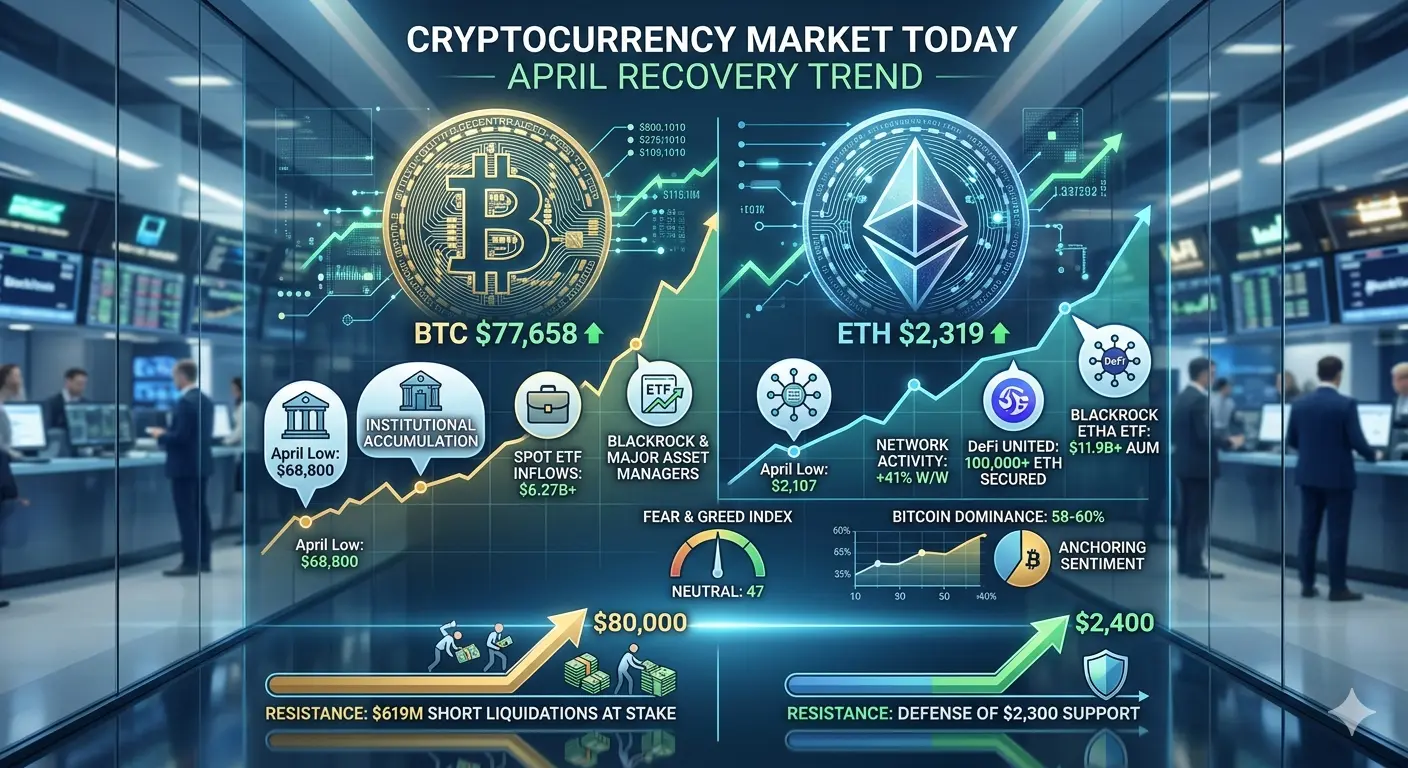
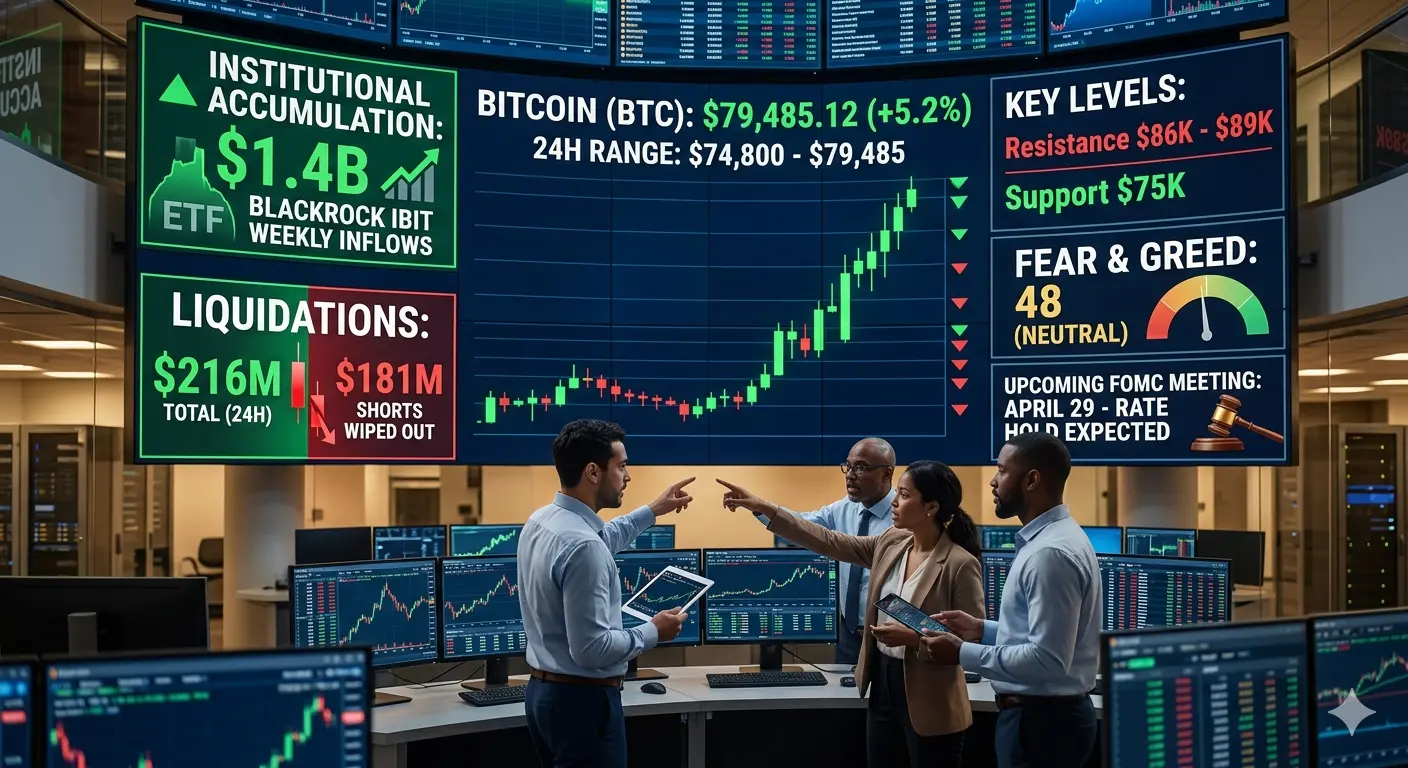
The cryptocurrency market is currently navigating a period of significant structural transformation, characterized by institutional dominance, shifting sentiment, and evolving regulatory landscapes. Bitcoin trades around $77,564, down approximately 1% over the past 24 hours, while Ethereum hovers near $2,317, showing similar muted performance. The fear and greed index sits at 31, indicating a prevailing sense of caution among market participants.
The most striking development in recent days has been the overwhelming institutional accumulation of Bitcoin. Spot Bitco
BTC0.28%
ETH0.24%
AAVE0.03%
MNT1.99%
post-image
post-image
  • Reward
  • 9
  • 1
  • Share
discovery:
To The Moon 🌕
View More
#WCTCTradingKingPK
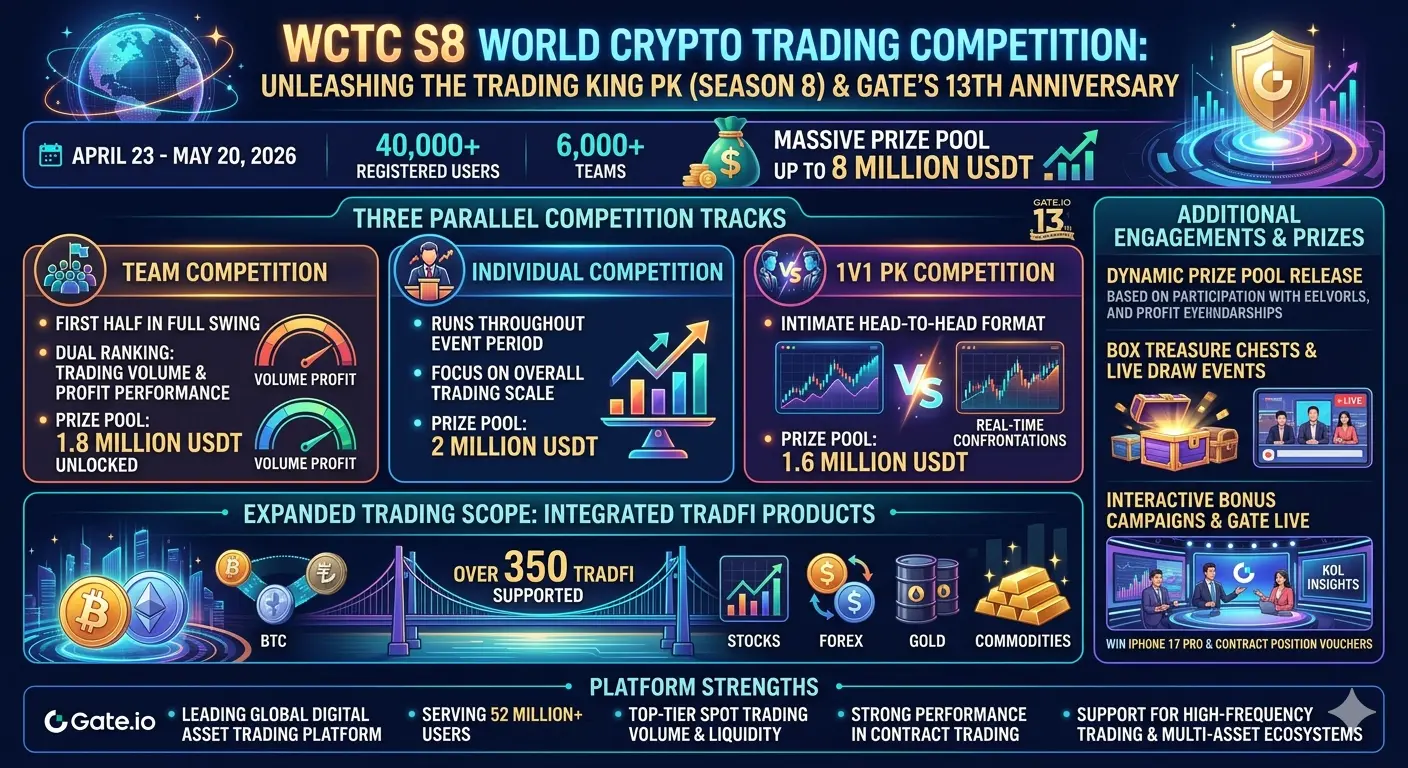
The WCTC Trading King PK competition stands as one of the most exhilarating battlegrounds for traders seeking to prove their skills and claim substantial rewards. As part of the larger WCTC S8 Global Trading Competition series, this head-to-head format brings a unique intensity that sets it apart from traditional trading contests.
The competition structure revolves around direct confrontation between traders, creating a high-stakes environment where every trade counts. Unlike standard trading competitions that focus solely on cumulative volume or profit metrics, the PK form
post-image
post-image
  • Reward
  • 11
  • Repost
  • Share
discovery:
To The Moon 🌕
View More
#Gate13thAnniversaryLive
Gate is marking its 13th anniversary with a global live celebration, highlighting its growth from a small exchange into a major player in the digital asset industry. Over the past decade, the platform has expanded its ecosystem beyond basic trading, building services around spot trading, futures, copy trading, launchpads, and broader Web3 infrastructure.
The anniversary live event focuses on reflecting this journey while also showcasing future direction. A key theme is the evolution of centralized exchanges in a rapidly changing crypto landscape, where competition is
post-image
post-image
  • Reward
  • 7
  • Repost
  • Share
discovery:
LFG 🔥
View More
#IntelandTexasInstrumentsSurge
The recent surge in both Intel Corporation and Texas Instruments reflects one of the strongest semiconductor rallies in years, driven mainly by accelerating demand for AI infrastructure and data center expansion.
Intel has seen a powerful upward move after reporting stronger-than-expected earnings and an optimistic outlook tied to AI-driven CPU demand. Investors are increasingly recognizing that AI is not only about GPUs but also about CPUs, networking, and system-level computing. Intel’s rebound is also supported by improving margins, rising server demand, and
post-image
post-image
  • Reward
  • 7
  • Repost
  • Share
discovery:
To The Moon 🌕
View More
#OpenAIReleasesGPT-5.5
OpenAI has officially released GPT-5.5, marking a major upgrade in its AI model lineup and pushing competition in the artificial intelligence space even further.
The new model is described as a more powerful, efficient, and “agent-like” system that can handle complex, multi-step tasks with less guidance. According to OpenAI, GPT-5.5 is designed to better understand user intent early, plan actions more effectively, and complete tasks like coding, research, writing, and tool usage with higher accuracy and stability.
One of the biggest highlights of GPT-5.5 is its improve
post-image
post-image
  • Reward
  • 4
  • Repost
  • Share
QueenOfTheDay:
To The Moon 🌕
View More
#TopCopyTradingScout
Copy trading has become one of the fastest-growing strategies in the crypto market, offering both new and experienced traders a way to participate without constantly analyzing charts. At its core, it allows users to replicate the trades of more experienced participants, turning individual strategies into shared opportunities. But while the concept sounds simple, success in copy trading depends heavily on selecting the right traders to follow.
A top copy trading scout understands that performance alone is not enough. Many traders show impressive short-term gains, but consi
post-image
post-image
  • Reward
  • 6
  • Repost
  • Share
QueenOfTheDay:
To The Moon 🌕
View More
#USMilitaryMaduroBettingScandal
The recent scandal involving a member of the United States military has sparked serious debate about the intersection of national security and emerging financial platforms. At the center of the case is an allegation that a soldier used classified operational knowledge to place bets on the outcome of a mission targeting Nicolás Maduro, turning sensitive intelligence into personal profit.
What makes this situation particularly alarming is not just the financial gain—reported to be in the hundreds of thousands—but the method behind it. The individual allegedly had
post-image
post-image
  • Reward
  • 6
  • Repost
  • Share
QueenOfTheDay:
To The Moon 🌕
View More
  • Pin