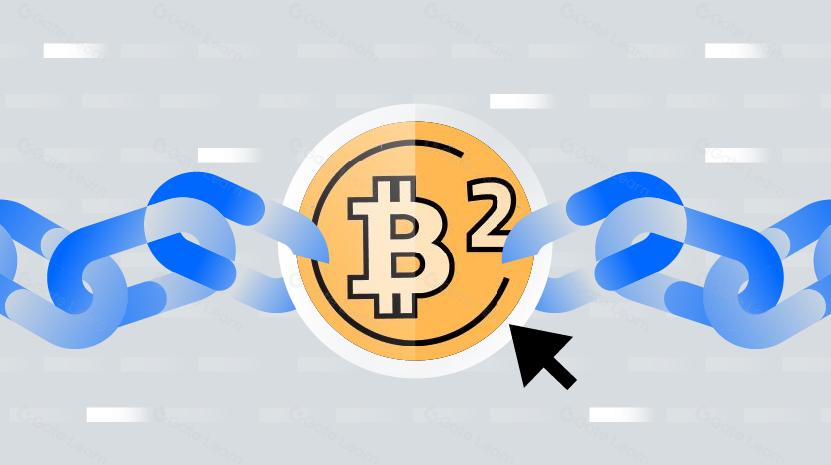
B^2 Network is a decentralized Data Availability (DA) and storage platform that addresses data compression and verification issues using an off-chain DA network. It aims to reduce dependence on the Bitcoin main network. The B^2 Hub functions as a DA layer and off-chain verification layer, similar to Celestia, to prevent data withholding and other malicious activities. In the future, B^2 Network plans to incorporate Bitcoin Layer2 to establish a universal DA layer and data storage layer within the Bitcoin ecosystem. The B^2 Hub node validates transaction batches, while storage nodes compete for block production rights to earn incentives. The workflow of B^2 Network involves the sequencer creating new blocks, the aggregator sending them to the Prover for ZK proof generation, and the B^2 Hub node verifying and transmitting the data hash to the Bitcoin chain. As a universal DA and verification layer, B^2 Hub has the potential to enhance other Bitcoin second-layer solutions.
2026-03-24 11:53:56
As L2 fees decrease, more unique applications will choose to build on L2. The Cancun upgrade is an important milestone in Ethereum’s scalability journey, heralding a new era of increased activity on the L2 chain.
2026-03-24 11:53:55
With the launch of ETF, the explosion of BRC-20 ecosystem and the added narrative of halving, the market's focus is once again on the Bitcoin ecosystem. CKB seems to have always adhered to its original intention, insisted on being isomorphic with Bitcoin, and further bridged the gap.
2026-03-24 11:53:53
Starknet supports native-level AA account abstraction, allowing highly customizable transaction processing solutions, and implements multiple countermeasures to ensure security. These features create necessary conditions for Starknet to support functions like storage layering and garbage contract detection, despite some functionalities not yet implemented, providing an important foundation for the AA ecosystem.
2026-03-24 11:53:53
Bittensor, Fetch.ai, and SingularityNET share a common goal: using token incentives to drive the supply of AI resources, whether models, compute, or services, while building open networks that lower barriers to AI access and challenge the dominance of centralized platforms. However, their core differences lie in the technical layers they operate on and how they capture value. Rather than competing within a single track, they address three distinct stages of decentralized AI, model production, task execution, and service distribution.
2026-03-23 07:51:59
This article explores the potential of Account Abstraction (AA), particularly its ability to enhance the blockchain user experience through programmable key management systems. The author analyzes the advantages and disadvantages of traditional key management methods (such as 12-word seed phrases) and new technologies like Passkeys, MPC, and cloud TEEs, proposing the integration of AA functionalities to enable key rotation, session keys, and multiple recovery mechanisms.
2024-12-16 04:14:20
Render Network uses smart contracts to build a decentralized rendering service ecosystem and utilizes distributed computing resources. This process not only increases rendering efficiency, but also reduces costs, provides high-quality rendering results, and achieves more efficient resources. Utilization enables creators to cost-effectively access GPU resources.
Repost the original title:Render Network: Linking global GPU energy and leading a new revolution in 3D rendering
2024-06-19 10:19:59