




YamahaBlue

vip
Age 2.4 Yıl
Peak Tier 5
No content yet
Gate has officially launched the "ETF Lucky Draw" campaign, helping you easily seize opportunities in global financial markets, including US stocks, commodities, and market indices. During the event period, users who trade eligible ETFs can enjoy multiple exclusive rewards: complete daily trading check-ins to draw a Standard Mystery Box; reach the required accumulated trading days to unlock a Premium Mystery Box (100% guaranteed win); and join the trading volume leaderboard to share a massive 20,000 USDT prize pool. https://www.gate.com/campaigns/4374?ref=AwBFBl5c&ref_type=132
post-image
  • Reward
  • Comment
  • Repost
  • Share
  • Reward
  • Comment
  • Repost
  • Share
The Crude Oil Futures Trading Challenge is now live on Gate. Check in daily and share 200,000 USDT in total rewards. https://www.gate.com/campaigns/4442?ref=AwBFBl5c&ref_type=132
post-image
  • Reward
  • Comment
  • Repost
  • Share
  • Reward
  • Comment
  • Repost
  • Share
  • Reward
  • Comment
  • Repost
  • Share
  • Reward
  • 3
  • Repost
  • Share
EagleEyevip:
To The Moon 🌕
View More
The Crude Oil Futures Trading Challenge is now live on Gate. Check in daily and share 200,000 USDT in total rewards. https://www.gate.com/campaigns/4442?ref=AwBFBl5c&ref_type=132
post-image
  • Reward
  • 1
  • Repost
  • Share
discoveryvip:
2026 GOGOGO 👊
Gate has officially launched the "ETF Lucky Draw" campaign, helping you easily seize opportunities in global financial markets, including US stocks, commodities, and market indices. During the event period, users who trade eligible ETFs can enjoy multiple exclusive rewards: complete daily trading check-ins to draw a Standard Mystery Box; reach the required accumulated trading days to unlock a Premium Mystery Box (100% guaranteed win); and join the trading volume leaderboard to share a massive 20,000 USDT prize pool. https://www.gate.com/campaigns/4374?ref=AwBFBl5c&ref_type=132
post-image
  • Reward
  • 1
  • Repost
  • Share
discoveryvip:
To The Moon 🌕
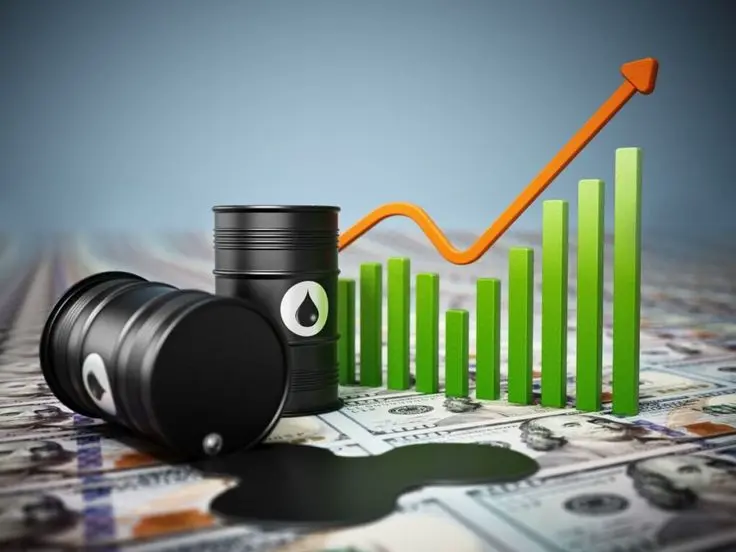
#OilPricesRise
Thanks good sharing about #OilPricesRise
post-image
User_anyvip
Everyone is debating whether the Strait of Hormuz will close. But that's not what the markets are actually pricing in.
The real change is how the strait is effectively controlled and under what rules trade flows.
Let me explain:
The Strait of Hormuz is the most critical energy corridor through which approximately 20% of global oil trade passes.
Any tension here directly impacts prices.
Recently, Iran's increased military and operational control in the region has created a new layer of risk in the market.
This risk isn't just about "will the strait close?"
👉 The real question is:
What happens if the conditions for passage through the strait change?
🔍 New Risk from the Market's Perspective
There are three main factors pushing oil prices up today:
1. Geopolitical Risk Premium is Increasing
As Iran's influence in the region increases, tanker passages carry more security and political risks.
2. Insurance and Logistics Costs Are Rising
Tanker insurance (war risk premiums) are increasing significantly.
This is directly reflected in the price per barrel.
3. Politicization of Trade
Energy is now priced not only by supply and demand balance, but also by geopolitical alignment.
💱 The Non-Dollar Trade Debate
In recent years, especially:
China
Russia
Iran
Increased energy trade in local currencies between these countries,
is questioning the long-term strength of the petrodollar system.
However, let's clarify this:
👉 The majority of global oil trade is still dollar-based.
👉 Trade in Yuan is increasing, but the system has not yet changed.
⚠️ Where is the Real Breaking Point?
If these scenarios occur, then the markets will truly change:
Permanent transit restrictions in the Strait of Hormuz
De facto access restrictions to certain countries
The mandatory adoption of non-dollar payment systems
At this point:
➡️ Oil prices will not only rise
➡️ They will also shift to a new pricing regime
📊 Market Impact (Short-Term)
Brent oil: upward pressure
Volatility: trending upward
Energy stocks: remain strong
Safe-haven demand: increasing
🧠 Conclusion
Today, the markets see one thing very clearly:
The risk is no longer just supply disruption.
It's the possibility of a change in the rules of energy flow.
And this possibility alone is enough to push oil prices higher.
#OilPricesRise
#CryptoMarketSeesVolatility
#CeasefireExpectationsRise
#GateSquareAprilPostingChallenge
#CreatorLeaderboard
repost-content-media
  • Reward
  • Comment
  • Repost
  • Share
post-image
User_anyvip
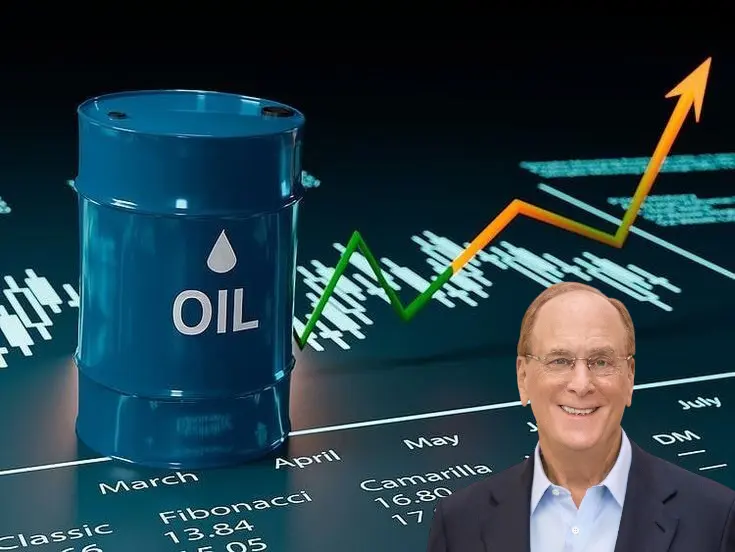
BlackRock CEO Larry Fink, in an interview on the BBC's Big Boss Interview podcast, warned that if oil prices reach $150 per barrel, the global economy could be dragged into a "harsh and steep recession."
$XTIUSD $XBRUSD
Fink heads BlackRock, the world's largest asset manager (managing approximately $14 trillion in assets), a scale that gives him a privileged perspective on global markets. The interview was published at a time when the ongoing war between the US-Israel and Iran is shaking energy markets.
Two extreme scenarios
Fink emphasized that the outcome of the war "will not be somewhere in the middle," but will evolve into one of two extremes:
1. De-escalation scenario: If the conflict ends and Iran is once again accepted by the international community, oil prices could fall below pre-war levels, to $40/barrel. Fink describes this as a picture of "abundance and growth."
2. Threat Scenario: Even if a ceasefire is achieved, if Iran continues to pose a threat to "trade, the Strait of Hormuz, and the peaceful coexistence of the Gulf Cooperation Council (GCC) region," he predicts that oil prices could remain above $100, near $150, for years. He used the phrase "we will experience a global recession" directly in response to this scenario.
Strait of Hormuz and Supply Shock
At the heart of the crisis, which the International Energy Agency has described as "the largest oil supply disruption to date," is the Strait of Hormuz. The strait carries approximately one-fifth of the world's gas and crude oil supply, and due to the war, oil and LNG shipments have almost come to a standstill.
Fink described the high energy prices as a "regressive tax," noting that the increase in costs disproportionately affects the poor. He stated that $150 oil would rapidly spread inflation through fuel, transportation, production costs, and food prices, forcing central banks to intervene.
Market Reaction
On the day the interview was published, oil prices fell by approximately 4% following news that the US had sent Iran a 15-point proposal to end the war. However, Fink emphasized that the decisive factor was not the duration of the war, but its ultimate outcome.
Fink also stated that if oil remains expensive, countries may reduce their reliance on oil and gas and accelerate investment in renewable energy sources such as solar and wind.
#OilPricesRise
#CeasefireExpectationsRise
#GateSquareAprilPostingChallenge
#CryptoSurvivalGuide
#CreatorLeaderboard
repost-content-media
  • Reward
  • Comment
  • Repost
  • Share
post-image
Gate_Squarevip
📢 Gate Square | Apr 3 Hot Topic: #OilPricesRise
🚨 Oil settles above $110 as Middle East tensions escalate
US–Iran tensions intensify. On Apr 3, a major bridge in Karaj was attacked, prompting Iran’s response. WTI surged 15%, with settlement prices topping $110 for the first time since 2022.
🎁 Share your views to split $1,000 in trading vouchers (5 winners)!
💬 Discussion Topics:
1️⃣ Is the conflict becoming uncontrollable?
2️⃣ Did you catch this oil rally? Share your oil trading strategy.
3️⃣ How could the conflict impact the crypto market?
Share your thoughts 👉 https://www.gate.com/post
Gate TradFi 👉 https://www.gate.com/tradfi
📅 Apr 3, 07:00 – Apr 5, 10:00 UTC
repost-content-media
  • Reward
  • Comment
  • Repost
  • Share
User_anyvip
📢 Gate Square | Apr 3 Hot Topic: #OilPricesRise
🚨 Oil settles above $110 as Middle East tensions escalate
US–Iran tensions intensify. On Apr 3, a major bridge in Karaj was attacked, prompting Iran’s response. WTI surged 15%, with settlement prices topping $110 for the first time since 2022.
🎁 Share your views to split $1,000 in trading vouchers (5 winners)!
💬 Discussion Topics:
1️⃣ Is the conflict becoming uncontrollable?
2️⃣ Did you catch this oil rally? Share your oil trading strategy.
3️⃣ How could the conflict impact the crypto market?
Share your thoughts 👉 https://www.gate.com/post
Gate TradFi 👉 https://www.gate.com/tradfi
📅 Apr 3, 07:00 – Apr 5, 10:00 UTC
#OilPricesRise
repost-content-media
  • Reward
  • Comment
  • Repost
  • Share
  • Reward
  • Comment
  • Repost
  • Share
  • Reward
  • Comment
  • Repost
  • Share
About the Economic factor 🤔 good, thanks sir 🙋
#OilPricesRise
User_anyvip
The economic impacts of the conflict are felt across a wide range globally, primarily affecting energy markets and creating a chain reaction. With the de facto closure of the Strait of Hormuz, Middle Eastern oil production has suffered a loss of around ten million barrels per day, Brent crude oil prices have reached $110 per barrel, and physical delivery prices are even higher. This supply shock is described by the International Energy Agency as the largest oil supply disruption in history, and according to the International Monetary Fund, every 10% sustained increase in oil prices raises global inflation by 40 basis points while reducing economic growth by 0.1 to 0.2 percentage points. In developed economies, inflation rates risk climbing to 4.2%, while developing countries, particularly major energy importers in Asia and Europe, face widening current account deficits, dwindling foreign exchange reserves, and currency depreciation.
The transportation, logistics, and airline sectors are directly affected by cost increases; sea freight rates have reached record levels, while the prices of inputs critical to food production, such as fertilizers and ammonia, have risen by fifteen to twenty percent, threatening global food security. The surge in industrial production costs is suppressing consumer spending, narrowing corporate profit margins, and generally increasing the likelihood of a stagflation-like environment. While some oil-exporting countries are experiencing short-term increases in budget revenues, the contraction in global demand and infrastructure damage are limiting these gains, and in the long term, permanent damage to energy facilities is pushing repair costs to trillions of dollars. Volatility in financial markets has sharply increased, stock indices are declining in non-energy sectors, bond yields are rising, and central banks are being forced to reconsider their interest rate policies in the fight against inflation.
Consequently, if the conflict continues, global gross domestic product growth forecasts are being revised downwards, trade routes are being reshaped, and investment decisions are being postponed due to uncertainty. These dynamics have the potential to leave long-term damage, particularly in energy-dependent economies, prompting governments to take measures such as fuel subsidies, emergency stockpile releases, and fiscal stimulus packages.
#OilPricesRise
#GateSquareAprilPostingChallenge
#CreatorLeaderboard
#CryptoMarketSeesVolatility
#AreYouBullishOrBearishToday? $XTIUSD $XTIUSD20
repost-content-media
  • Reward
  • Comment
  • Repost
  • Share
User_anyvip
The inflationary effects of the conflict are manifesting rapidly and widely in the global economy, creating broad-based price pressures, primarily through sharp increases in energy costs. With the de facto closure of the Strait of Hormuz and a loss of approximately twenty million barrels of oil supply per day, Brent crude oil prices have risen to $109 per barrel. According to International Monetary Fund models, every sustained ten percent increase in oil prices raises global headline inflation by forty basis points while reducing global production by 0.1 to 0.2 percentage points. The energy shock directly triggers transportation, logistics, and production costs, leading to a fifteen to twenty percent increase in food prices, particularly in fertilizer and fuel inputs, threatening global food security and significantly pushing consumer inflation upwards in import-dependent regions.
While core inflation in advanced economies is gaining momentum through wage adjustments due to second-round effects, developing countries, especially energy importers like those in Asia, Europe, and Turkey, face the risk of annual inflation rates exceeding five to seven percent due to the amplification of import inflation as a result of local currency depreciation against the dollar. Central banks are forced to keep interest rate policies tight or increase them to anchor inflation expectations, but this slows economic growth, increasing the likelihood of a stagflation-like environment. The duration of the conflict is critical; in a short-term scenario, inflationary pressure remains temporary, while in a long-term scenario, supply chains are disrupted, geopolitical risk premiums become permanent, and medium-term price stability is seriously threatened.
Consequently, these dynamics are leading governments to take measures such as fuel subsidies, emergency stockpile releases, and fiscal support packages, but a reduction in inflationary pressures globally seems possible only through diplomatic de-escalation of the conflict.
#OilPricesRise
#CryptoMarketSeesVolatility
#CreatorLeaderboard
#GateSquareAprilPostingChallenge
#AreYouBullishOrBearishToday?
$XBRUSD $XTIUSD20
repost-content-media
  • Reward
  • Comment
  • Repost
  • Share
User_anyvip
Central banks' interest rate responses are shaping up quickly but cautiously in response to the energy shock and inflationary pressures created by the conflict, and are diverging due to a lack of global coordination. The Federal Reserve is delaying its rate-cutting cycle, and even signaling further tightening of up to 25 basis points if necessary, as sustained oil prices push headline inflation by 40 basis points or more, because the second round of core inflation risks triggering a wage spiral, and Fed models estimate a growth loss of 0.5 percentage points in a stagflation scenario. The European Central Bank is holding its deposit rate at 3.25 percent and signaling no cuts in the next six months, as import inflation in energy-importing Eurozone economies rises to 5.5 percent, as the weakening euro-dollar parity and rising logistics costs make core inflation sticky, highlighting the ECB's mandate of price stability.
The People's Bank of China, while taking steps to support the yuan as the oil shock hits Asian supply chains, is keeping its policy interest rate at 3.5% and injecting liquidity by lowering reserve requirements. However, due to inflation remaining below its target, it is pursuing a balanced policy to support growth rather than aggressive tightening. The Central Bank of the Republic of Turkey, on the other hand, is keeping its policy interest rate at 50% due to the current account deficit pressure created by its status as an energy importer and the depreciation of the Turkish lira. It is also sending signals of further tightening against the risk of inflation exceeding 60%, as the amplification of imported inflation and a 20% increase in food prices are disrupting local inflation expectations. The TCMB's priority is to protect its foreign exchange reserves and continue the fight against inflation.
In other developing countries, such as Brazil, India, and Indonesia, central banks are showing a tendency to raise interest rates by 25 to 50 basis points in response to sharp currency depreciation, further restricting global capital flows and increasing borrowing costs. While central banks generally act proactively in combating inflation, they maintain data-driven and flexible interest rate policies due to the uncertain duration of the conflict. However, analyses by the International Monetary Fund and the Bank for International Settlements emphasize that in a long-term energy crisis scenario, a simultaneous wave of tightening has the potential to drag global growth down by one percentage point. In this context, achieving de-escalation through diplomacy is considered the most critical element in alleviating interest rate pressure.
$XTIUSD $XBRUSD #OilPricesRise
#国际油价走高
#CreatorLeaderboard
#CryptoMarketSeesVolatility
#GateSquareAprilPostingChallenge
repost-content-media
  • Reward
  • Comment
  • Repost
  • Share
  • Pin