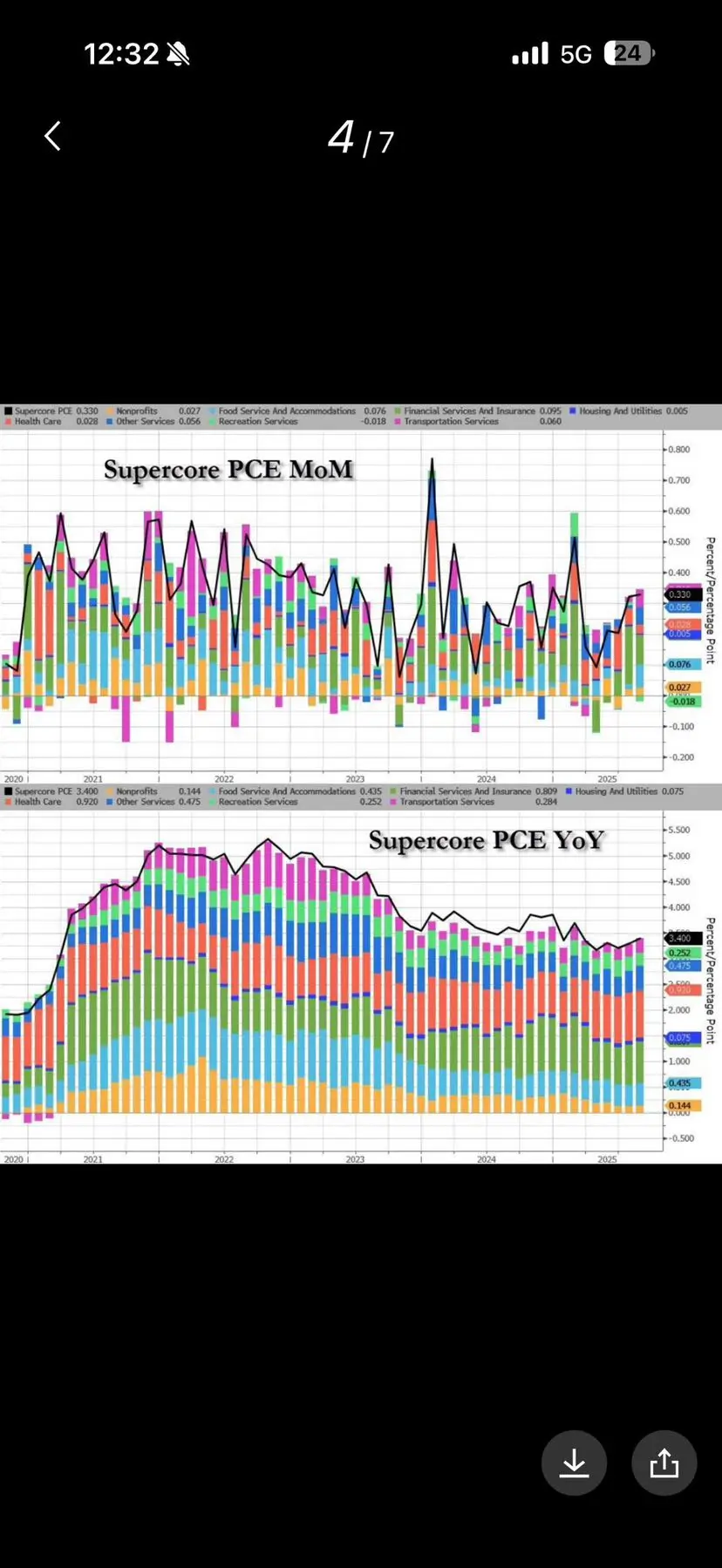
The U.S. August PCE data was announced in the evening, and it met expectations. A small highlight is that the previous value of the core PCE month-on-month rate was revised down from 0.3 to 0.2. Core PCE inflation remains basically stable and within a controllable range, which is unlikely to prompt the Federal Reserve to change its pace. From a sub-item perspective:
1) The cost of the service industry is the main factor driving prices. Among them, the main driving force behind "super core inflation" (service industry inflation excluding housing) comes from financial services, dining services, and transportation costs. The report points out that the rise in financial service costs is related to the boom in the stock market and its associated services, and has no direct connection to tariffs.
2) The market's expected rebound in durable goods inflation did not materialize, and their prices actually fell again in August. At the same time, the price of non-durable goods also showed a downward trend. Continued weakness in commodity prices suggests a slower-than-expected pace of tariff transmission.
U.S. consumer spending in August rose strongly for the third consecutive month, increasing by 0.4% after adjusting for inflation, surpassing the expected 0.2%, indicating consumer resilience.
The one-year and five-year inflation expectations announced afterwards were slightly lower than expected.
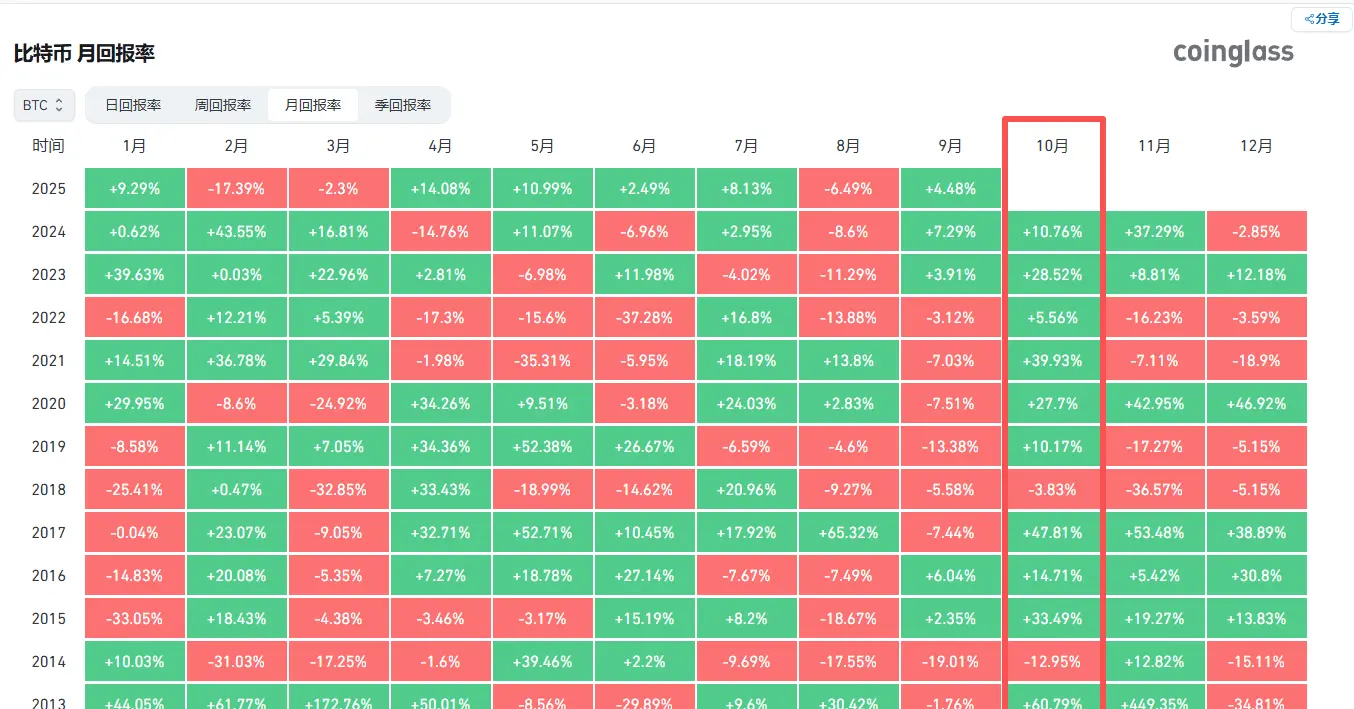
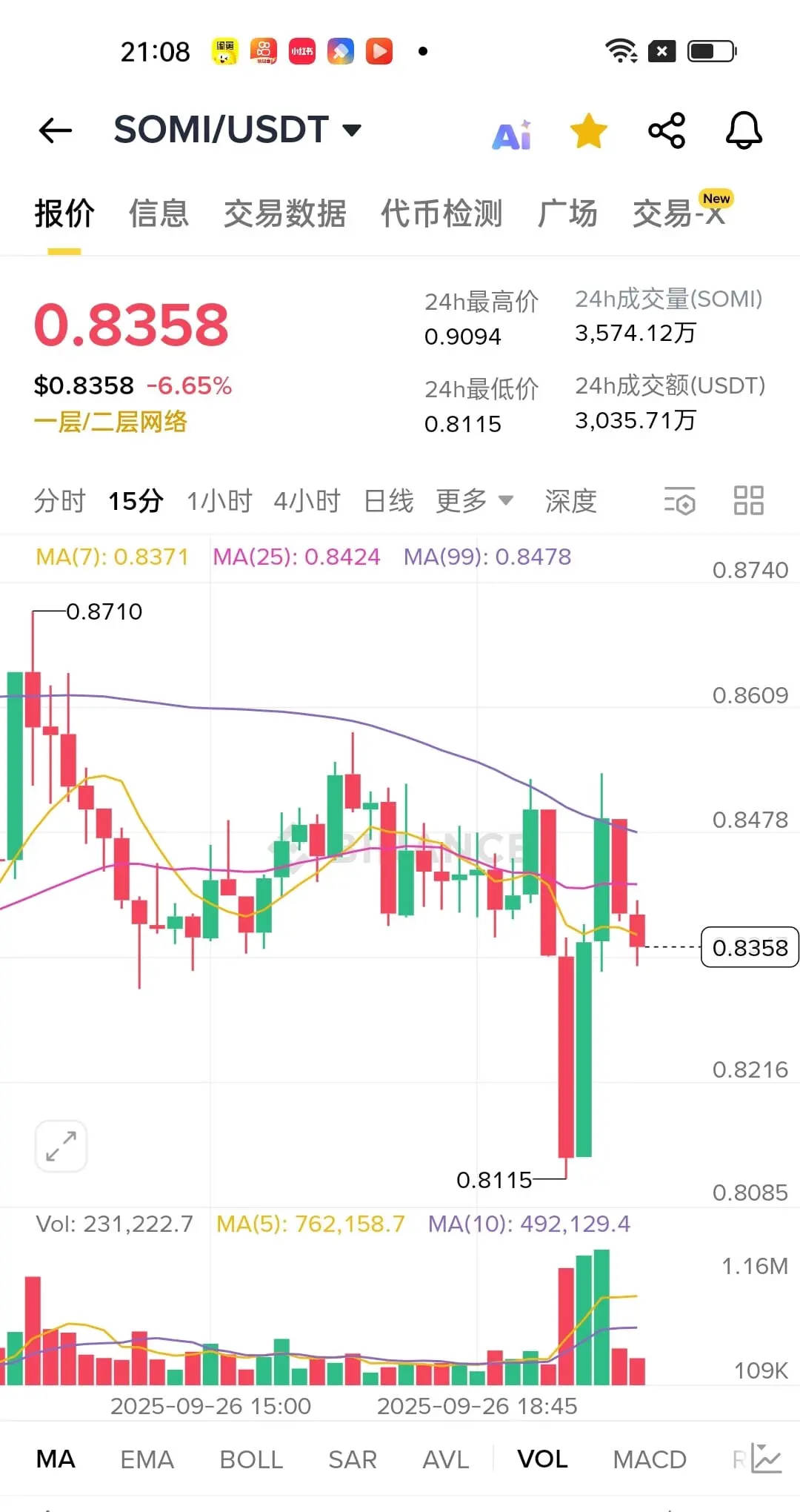
Overall, it reflects a situation where inflation is rising but still remains controllable, and American consumption remains strong. As mentioned before, this falls under the moderate scenario of the three situation simulations: this situation would be better for US stocks with stronger fundamentals, which is relatively positive for cryptocurrencies, and should slightly ease the rapid decline in the past few days.
#BTC #ETH