ShizukaKazu

vip
Age 3.4 Year
Peak Tier 5
No content yet
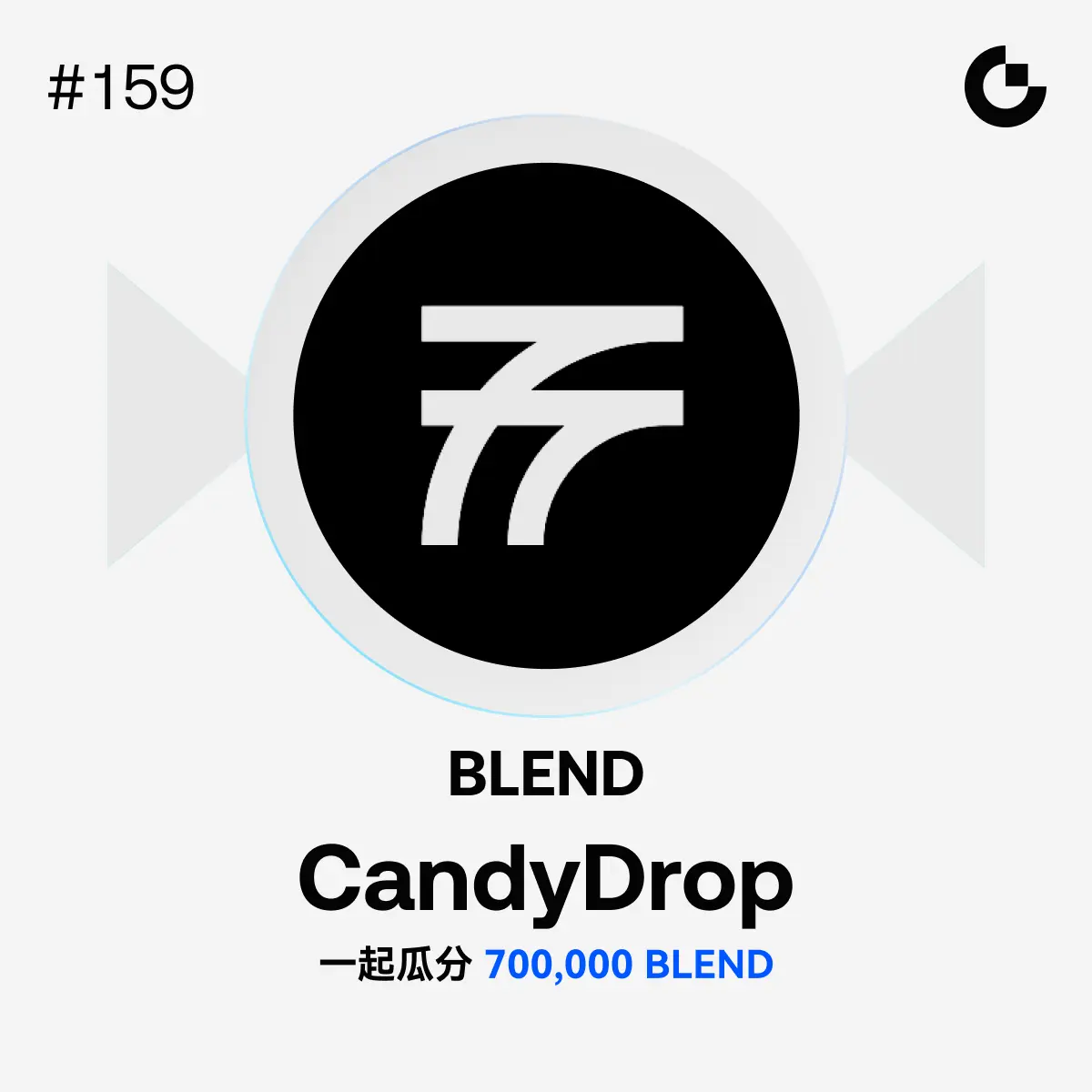
#Gate广场五月交易分享 The new CandyDrop is here! A total of 700,000 $BLEND waiting for you to share 🍬
🔹 Complete your first contract trade and accumulate 2,000 $BLEND contract trades to share the prize pool
🔹 Complete 3,000 $USDT contract trades daily to share the prize pool
🔹 Successfully invite friends through the CandyDrop invitation link to share the prize pool
The more trades, the bigger the rewards
Join now: https://www.gate.com/candy-drop/detail/BLEND-328
BLEND-10.69%
View Original
post-image
  • Reward
  • 8
  • Repost
  • Share
Ryakpanda:
The bull quickly returns 🐂
View More
#Gate广场五月交易分享 Derivatives Market Depth Analysis
Perpetual Contract Market: The current open interest (OI) for BTC is about $54 billion, at a historically high level. Within 24 hours after the FOMC, 122,173 traders were forced to liquidate, with a total liquidation amount of $535 million, including $372 million long liquidations and $162.5 million short liquidations — longs are the main victims of this round of decline, and they are not few.
The largest single liquidation occurred on Bn's ETHUSDT perpetual contract, amounting to $7.9 million.
Regarding funding rates, ETH previously exper
BTC2.63%
ETH1.97%
SOL1.22%
View Original
Ryakpanda
#Gate广场五月交易分享 Derivatives Market Depth Analysis
Perpetual Contract Market: The current open interest (OI) for BTC is about $54 billion, at a historically high level. Within 24 hours after the FOMC, 122,173 traders were forced to liquidate, with a total liquidation amount of $535 million, including $372 million long liquidations and $162.5 million short liquidations — longs are the main victims of this round of decline, and they are not few.
The largest single liquidation occurred on Bn's ETHUSDT perpetual contract, amounting to $7.9 million.
Regarding funding rates, ETH previously experienced negative funding rates (shorts paying longs), which is a signal dominated by shorts, but it also means that the number of longs that have been liquidated has decreased, and the endogenous downward momentum is also waning.
After the March FOMC, extreme negative funding rates appeared: BTC at -0.0010%, ETH at -0.0004%, SOL at -0.0101%. The strong rebound in late April has gradually digested these extreme short sentiments.
Liquidation heatmap: The dense short liquidation zone above: $78,000–$80,000 (short squeeze target)
The long liquidation zone below: $74,000–$72,000 (pinning target) The market forms a "magnetic tug-of-war" between these two zones, and the short-term trend depends on which side is triggered first.
repost-content-media
  • Reward
  • 8
  • Repost
  • Share
Ryakpanda:
The bull quickly returns 🐂
View More
#Gate广场五月交易分享 The U.S. crypto regulation faces a key milestone in May: advancing the Market Structure Act and predicting the implementation of a market ban.
Washington in May is becoming the focal battleground for the crypto industry. The U.S. Market Structure Act is gaining significant momentum in the Senate Banking Committee, with legislators aiming to hold a review hearing in mid-May.
Chairman Tim Scott said the bill has entered the "red zone," hoping to submit it for Senate vote in June or July.
Core controversies: three major hurdles to overcome
Despite strong willingness to push
WLFI-8.24%
View Original
Ryakpanda
#Gate广场五月交易分享 The U.S. crypto regulation faces a key milestone in May: advancing the Market Structure Act and predicting the implementation of a market ban
The U.S. crypto regulation reaches a critical point in May: the progress of the Market Structure Act and predictions of a market ban being implemented. Washington in May is becoming the focal battleground for the crypto industry. The U.S. crypto Market Structure Act is gaining significant momentum in the Senate Banking Committee, with legislators aiming to hold a review hearing in mid-May.
Chairman Tim Scott said the bill has entered the "red zone," hoping to submit it for Senate vote in June or July.
Core disputes: three major hurdles to overcome
Despite strong push efforts, several key disagreements remain unresolved. How to define the attribution of stablecoin yields, how to incorporate moral clauses, and how to handle the crypto interests linked to the Trump family have become critical variables influencing the bill’s direction.
Senator Thom Tillis explicitly demanded the committee chairman to advance the review but warned, "If the bill does not include moral clauses, I will oppose it." Senator Angela Alsobrooks also emphasized that to secure bipartisan votes, illegal finance and moral issues must be addressed. Senator John Kennedy, due to disputes over housing legislation, currently does not support crypto legislation. The industry generally remains cautious. Industry estimates put the bill’s passage probability at only 15% to 25%, down from Galaxy Research’s previous estimate of about 50%, which has been significantly lowered after recent disputes intensified.
Trump’s interest links: the moral sword hanging over the bill
Bloomberg estimates that Trump has profited at least $1.4 billion from his crypto projects, including the DeFi stablecoin project World Liberty Financial and a 20% stake in mining company American Bitcoin. This financial relationship has been repeatedly mentioned during Senate debates, serving as a catalyst for pushing moral clauses.
Senate takes urgent action: banning senators from trading prediction markets
Meanwhile, the U.S. Senate unanimously passed S. Res. 708, a resolution banning senators from trading in prediction markets, effective immediately. The proposal was introduced by Ohio Republican Senator Bernie Moreno, aiming to curb insider trading.
The trigger was: a Polymarket account bet on Venezuelan President Maduro’s "resignation" and profited $400k, raising concerns over insider information. Last week, U.S. Army soldier Gannon Ken Van Dyke was arrested over this. Kalshi’s founder called this "an important step," and Polymarket expressed full support. If the Market Structure Act proceeds as scheduled in May, it will mark a key turning point in U.S. crypto regulation from "enforcement-led" to "legislation-led." However, the game over moral clauses and the political controversy over Trump family interests may delay negotiations.
For miners and crypto practitioners, the legislative window from May to July will directly influence the shaping of the industry’s compliance framework. Bitu previously reported that the White House crypto advisor recently indicated that other obstacles to the Clarity Act are gradually being cleared, but the tug-of-war over moral clauses continues.
repost-content-media
  • Reward
  • 11
  • Repost
  • Share
MrFlower_XingChen:
To The Moon 🌕
View More
#Gate广场五月交易分享 Bitcoin drops to 70k: Is this the start of a crash or the beginning of a bottom-fishing opportunity?
Bitcoin & Ethereum: 20 days of "free fall"
Bitcoin (BTC) high point on January 15: 97k; current low: around 70k; 20-day decline of about 27%
The key is that during these 20 days, there was almost no decent rebound, just a continuous decline
Ethereum (ETH) high point on January 15: 3,300; current low: around 2,000; 20-day decline over 39%
If you think "this is exaggerated," let's review some past history.
After 2022, cases where Bitcoin declined over 25% in 20 days
Si
BTC2.63%
ETH1.97%
View Original
Ryakpanda
Bitcoin drops to 70k: Is this the start of a crash or the beginning of a bottom-fishing opportunity?
Bitcoin & Ethereum: 20 days of "free fall"
Bitcoin (BTC) high on January 15: 97k; current low: around 70k; 20-day decline of about 27%
The key point is that during these 20 days, there was almost no decent rebound, just a continuous decline
Ethereum (ETH) high on January 15: 3,300; current low: around 2,000; 20-day decline over 39%
If you think "this is exaggerated," let's review some past history.
Cases of Bitcoin dropping over 25% within 20 days after 2022
After 2022, there have been several typical cases where Bitcoin fell more than 25% in a short period: 1️⃣ 2025.11.11
107,000 → 80,600, 10 days, down 25%
2️⃣ 2024.7.29
70,000 → 49,000, 6 days, down 30%
3️⃣ 2022.11.6
21,000 → 15,000, 4 days, down 28%
4️⃣ 2022.6.7
31,000 → 17,000, 12 days, down 45%
5️⃣ 2022.5.5
40,000 → 26,000, 8 days, down 35%
6️⃣ 2021.11.10
67,000 → 42,000, 24 days, down 37%
If you look carefully, you'll notice: in 4 out of these 6 cases, the decline occurred during the 2022 bear market; the November 10, 2021 event was the start of the bear market crash.
After a sharp drop, will there be a "V-shaped" rebound?
In these short-term declines of over 25%, is there a significant rebound afterward?
The answer may disappoint many: almost none.
In these cases, the most common pattern after a plunge is only one—sideways consolidation, digesting the chips! It won't directly push prices to new highs.
So, in summary: when a "bear market" is confirmed, the first rebound is often a window to exit, not a signal to bottom fish.
This wave isn't actually sudden; will there be new lows?
That's the most concerned question.
1️⃣ Short-term: Breaking lower again is not easy
Currently, the Fear & Greed Index
11 compared to before:
December 16: 10
November 16: 9
So, the current 10 is already a very low value, and the 70,000 price level is a critical threshold, making it relatively difficult to break below in the short term!
2️⃣ ETF: No signs of panic outflows
Since January 16, Bitcoin ETF outflows haven't been extreme:
January 16: -390 million
January 20: -470 million
January 21: -580 million
January 30: -500 million
Most other days show small outflows around 100 million, and recently—over the past two days—the outflow momentum has significantly weakened.
Looking at overall inflow and outflow:
From October 2024 to May 2025, ETF inflows were highly concentrated during these periods, while Bitcoin prices mainly ranged between 60,000 and 100,000.
What does this mean?
Bitcoin around 70,000 is already below the ETF's average holding cost range. If it continues to fall below 70,000, the price you buy at could even be lower than the cost basis of the first wave of institutional ETF buyers, since Bitcoin has been at 60,000 since March 2024!
3️⃣ Long-term: Already in the "value zone"
From a longer cycle perspective: Bitcoin's monthly chart has experienced five consecutive down months, a rare occurrence—never seen with more than four consecutive months of decline.
Looking at Bollinger Bands: in the last bear market, the monthly Bollinger lower band touched the bottom boundary, indicating a phase bottom.
Currently, the monthly Bollinger lower band is at 56,000, meaning 56,000 is a theoretical limit, not necessarily to be reached.
From 124,000 to 56,000: a decline of about 54%, whereas the previous maximum decline was 76%, and each bear market's maximum retracement has been converging.
Multiple indicators point to the same conclusion
AHR999 = 0.37, below 0.45 for only 570 days, above 0.45 for 4,913 days, accounting for less than 10% of the time.
The current price is approaching or even below the shutdown cost of mainstream mining rigs.
The final conclusion: this is not an emotional gambling zone but a value investing zone.
It's not about going all-in or bottom fishing but about starting to scale in, rationally, for the long term.
Will the market give us even lower prices?
Possibly. But based on history, costs, and indicators, this range is already worth slowly loading your bullets into the chamber.
repost-content-media
  • Reward
  • 10
  • Repost
  • Share
MrFlower_XingChen:
To The Moon 🌕
View More
#DeFi4月安全事件损失超6亿美元 #Gate广场五月交易分享 Cross-Chain Bridges Are Not "Safety Bridges" | Dissecting Recent Attack Incidents and DeFi Security Weaknesses
In April 2026, two cross-chain bridge attacks occurred in succession, once again shaking the DeFi world.
First, on April 18, KelpDAO was compromised due to a flaw in cross-chain verification configuration, with hackers forging messages to steal about $293 million; immediately afterward, on April 29, Syndicate Commons' cross-chain bridge experienced a lack of message validation, causing the token to plummet nearly 35%.
The attackers did not touch the co
View Original
Ryakpanda
#DeFi4月安全事件损失超6亿美元 #Gate广场五月交易分享 Cross-Chain Bridges Are Not "Safety Bridges" | Dissecting Recent Attack Incidents and DeFi Security Weaknesses
In April 2026, two consecutive cross-chain bridge attacks shook the DeFi world again.
First, on April 18, KelpDAO was hacked due to a flaw in cross-chain verification configuration, resulting in the theft of approximately $293 million;
then, on April 29, Syndicate Commons' cross-chain bridge experienced a message verification failure, causing the token to plummet nearly 35%.
The attackers did not touch the core smart contract code but exploited the "trust blind spot" in the design of the cross-chain bridge—faking a message, and the system obediently approved it.
These two incidents once again expose a core issue: **Cross-chain bridges are becoming one of the "biggest weak points" in blockchain security.**
For ordinary users and project teams, the warning from these events is: the underlying trust model of cross-chain bridges is being systematically challenged.
This article starts from the essence of risk and provides practical protective suggestions.
---
**1. Why Are Cross-Chain Bridges Prone to "Falling Over"?**
Frequent accidents in cross-chain bridges stem from several common design flaws:
1. **Verification mechanisms are too simple**
Single-node confirmation can be broken, allowing hackers to forge instructions. This "single point of trust" pattern is equivalent to having no defenses in a decentralized world.
2. **Lack of two-way reconciliation**
Events on the source chain are not recognized by the target chain, enabling forged messages to pass freely. It's like a bank only checking your check but not verifying your account balance by phone.
3. **Over-concentrated permissions**
Large funds pools without limits, delays, or multi-signature protections can be drained in one breach. Like a safe with keys held by only one person—lose the key, and it's all over.
4. **Insufficient auditing**
Many vulnerabilities are only discovered after months of operation, leaving attack windows open for a long time. Auditing at launch does not guarantee eternal security; new methods often emerge after audits.
Both incidents fundamentally stem from "trust in the wrong single link."
---
**2. Common Risk Types of Cross-Chain Bridges**
Every link in a cross-chain bridge can become a breach point; stay vigilant when using.
1. **Verification mechanism vulnerabilities**
Single-point verification is easy to break, allowing forged messages to pass. Once hackers control the verification node, they hold the "release button" for all cross-chain assets.
2. **Contract logic flaws**
Such as missing permission checks, reentrancy vulnerabilities, etc. These small code oversights often become backdoors repeatedly exploited.
3. **Centralized node risks**
If servers, APIs, or keys are compromised, the system can go out of control. Centralized components relied upon by cross-chain bridges are favorite targets for nation-state hackers.
4. **Data trustworthiness issues**
External data hijacked or tampered with can cause incorrect execution. Oracles or off-chain data sources being polluted can cause the entire bridge to "go in the wrong direction."
5. **Concentrated funds pools**
Large assets without risk controls can be quickly drained if breached. Storing all user funds in one pool is like setting a trap for hackers—an "all-in-one" opportunity.
Users don't need to remember all technical details—just understand: **every step of a cross-chain bridge can go wrong.**
---
**3. How Can Ordinary Users Protect Themselves?**
This part is most critical—many losses are actually due to operational habits.
✅ Minimize cross-chain operations frequency
Every cross-chain transfer involves handing assets to a third party; any link failure can lead to asset loss.
💡 Recommendations:
- Avoid frequent, multi-time cross-chain transfers unless necessary.
- Prioritize mature, well-established cross-chain bridges and avoid niche or obscure tools.
Core principle: the more cross-chain steps, the higher the exposure risk.
✅ Do not use "just launched" cross-chain bridges
Many bridges, when first launched:
- Have untested code in real-world scenarios
- May lack thorough audits, and risk controls are incomplete—precisely the "window" hackers love.
💡 Suggestions:
- Avoid newly launched or overly hyped projects
- Observe for a period to see if anomalies or security incidents occur
👉 Remember: "Newer" ≠ "Safer"; often, it’s riskier.
✅ Test with small amounts before large transfers
Many users transfer large sums directly, which is very risky. It’s recommended to first transfer a small amount to test the full process, confirm receipt, then proceed with larger amounts. Even if issues occur, losses are manageable.
👉 The purpose of this approach: even if problems happen, losses are controlled, avoiding "one-time big losses."
✅ Be cautious with approvals and signatures
Most cross-chain operations involve wallet contract approvals, which are the main entry point for asset theft.
⚠ Key risk points:
- Unlimited approvals: can transfer all assets in your wallet without restriction
- Blindly approving unknown contracts makes you vulnerable to phishing thefts
💡 Protective suggestions:
- Revoke approvals immediately after completing operations
- Be cautious with unfamiliar signatures; verify address and permissions before signing
✅ Use separate wallets for asset management to avoid "total loss in one go"
Many users store all assets in one wallet; if compromised (via approval abuse, private key leaks, etc.), all assets are at risk.
👉 Safer practices:
- Main wallet: only for storing large assets (no daily interactions)
- Operational wallet: for DeFi, cross-chain, and daily activities
- High-risk operations: use a new, dedicated wallet
📌 Protective effect: even if the daily interaction wallet is hacked or stolen, your core large assets remain unaffected, preventing total loss.
---
**4. Security Issues Project Teams Must Prioritize**
If users can "reduce risks," project teams must "prevent accidents."
1. **Decentralized verification**
Multiple nodes reaching consensus to eliminate single points of failure. At least 3 independent verification nodes, not sharing the same infrastructure.
2. **Minimal permissions + time locks**
Split admin permissions, enforce delays (e.g., 24 hours) on critical operations. Even if permissions are stolen, the team and users have reaction windows.
3. **Ongoing auditing and monitoring**
Audits before launch are just the start; continuous 24/7 monitoring of abnormal transactions is essential. Many attacks happen after audits; dynamic defense is more important than one-time checks.
4. **Fund isolation**
Don’t keep all assets in one pool; implement layered management. Separate protocol funds, user collateral, and platform fees. A breach in one does not affect all.
---
**Conclusion**
KelpDAO and Syndicate Commons incidents once again prove: **Cross-chain bridges are not "functional components" but "high-risk infrastructure."**
From verification flaws to permission loss, every link can be an attack vector. Although the methods differ, the essence is the same: **trust assumptions are overly simplistic.**
For ordinary users: reducing cross-chain operations, cautious approvals, and asset diversification are the most effective defenses.
For the industry: decentralized verification, permission control, and transparent mechanisms are key directions for cross-chain security.
repost-content-media
  • Reward
  • 8
  • Repost
  • Share
Ryakpanda:
Go all in 🤑
View More
#Gate广场五月交易分享 As the U.S. government promotes the institutionalization of the "Strategic Bitcoin Reserve" proposed by Trump, Bitcoin is gradually transforming from an investment asset into a national-level reserve asset.
Recently, the White House signaled that significant progress regarding this reserve will be announced in the coming weeks, sparking high market attention. Meanwhile, several heavyweight figures in the crypto industry expressed bullish views at the Bitcoin 2026 conference, reinforcing market expectations of Bitcoin's medium- to long-term rise from multiple levels, including p
BTC2.63%
View Original
post-image
post-image
[The user has shared his/her trading data. Go to the App to view more.]
  • Reward
  • 12
  • Repost
  • Share
ybaser:
2026 GOGOGO 👊
View More
#比特币现货交易量新低 #Gate广场五月交易分享 Bitcoin prices rebounded and rose in April, but actual demand remains insufficient—here is the meaning of the cryptocurrency warning
Spot demand remains weak, indicating potential reserves are fragile.
Although on-chain signals are cautious, the market remains divided due to traders' expectations of a rise. Bitcoin undoubtedly performed strongly in April. Prices increased by nearly 20%, climbing from about $66,000 to a peak close to $79,000. On the surface, this looks like a nice breakout, one that could re-attract market attention. But behind this move, the story is
BTC2.63%
View Original
post-image
post-image
  • Reward
  • 9
  • Repost
  • Share
MrFlower_XingChen:
To The Moon 🌕
View More
#比特币ETF期权持仓限额增4倍 #Gate广场五月交易分享 The Bitcoin ETF options position limit has increased fourfold, which not only means more hedging tools but may also bring more risk exposure. A multi-angle analysis is needed:
1. More Hedging Tools
Meeting institutional needs: Large hedge funds, asset management firms, and others can build more complex hedging strategies through larger options positions, such as covered calls, protective puts, and basis trading, effectively managing the risks of Bitcoin spot holdings.
Enhancing market depth: Higher limits allow market makers and institutions to take on larger
BTC2.63%
View Original
  • Reward
  • 11
  • Repost
  • Share
CryptoDiscovery:
good information for sharing 💯
View More
#美国寻求战略比特币储备 #Gate广场五月交易分享 Breaking News! The United States' strategic Bitcoin reserves are about to be implemented, will the global financial landscape change?
The most significant signal in the crypto world recently is not short-term Bitcoin price fluctuations, but the imminent major official announcement regarding the U.S. strategic Bitcoin reserves! As the world's number one economy, the U.S. has officially included Bitcoin into its national strategic reserve category. This move has long surpassed ordinary cryptocurrency regulation, directly rewriting the global positioning of digital asse
BTC2.63%
View Original
post-image
post-image
  • Reward
  • 10
  • Repost
  • Share
MrFlower_XingChen:
To The Moon 🌕
View More
The essence of the rapid decline and slow rebound: futures driving the rise, spot market unable to keep up
The recent surge to $80k was not driven by spot demand; it was mainly passive buying caused by short covering in the derivatives market, a typical deleveraging trend.
Core data reveals vulnerabilities: net active trading volume dropped to about -$800 million within 24 hours, the lowest since April 2; the 30-day cumulative funding rate fell to -7%, reaching an extreme historical level; Coinb premium turned negative; Bitcoin spot ETF experienced net outflows, with short-term holder cost
BTC2.63%
View Original
post-image
post-image
  • Reward
  • 10
  • Repost
  • Share
MasterChuTheOldDemonMasterChu:
Chong Chong GT 🚀
View More
#美联储利率不变但内部分歧加剧 Powell leaves a divided Federal Reserve, oil prices near $120, and the market faces a triple dilemma
(1) Old Powell steps down, internal Fed divisions at their worst in thirty years
Early this morning Beijing time, the Federal Reserve announced its latest interest rate decision: the target range for the federal funds rate remains unchanged. This outcome was fully within market expectations and did not trigger any volatility. The real shock was hidden in the voting results and the post-meeting statement. Among the 12 voting FOMC members, 8 supported holding rates steady, while
View Original
[The user has shared his/her trading data. Go to the App to view more.]
  • Reward
  • 14
  • Repost
  • Share
MasterChuTheOldDemonMasterChu:
Chong Chong GT 🚀
View More
#美联储利率不变但内部分歧加剧 The End of the Powell Era! Signals from the Federal Reserve's April Rate Meeting
At the early morning of April 30th Beijing time, the Federal Reserve concluded its two-day policy meeting. In this highly symbolic meeting, the Fed announced that the federal funds rate would remain unchanged in the 3.5%–3.75% range, marking the third consecutive pause this year. Equally noteworthy as the policy decision is that this was Powell's last regular policy meeting as Chairman—his term will officially end on May 15th this year. As a result, the policy signals from the rate statement comb
View Original
Ryakpanda
#美联储利率不变但内部分歧加剧 Powell Era Comes to an End! Federal Reserve Signals at April Rate Meeting
At the early morning of April 30th Beijing time, the Federal Reserve concluded its two-day policy meeting. In this highly symbolic meeting, the Fed announced that the federal funds rate would remain unchanged in the 3.5%–3.75% range, marking the third consecutive pause this year. Equally noteworthy as the policy outcome is that this was Powell’s last regular policy meeting as Chairman—his term will officially end on May 15th this year. As a result, the policy signals from the rate statement combined with Powell’s personal remarks and internal disagreements led the market to view this meeting as a significant turning point for the Fed’s future path.
Internal Disagreements
From the rate statement, the Fed continued its policy tone of “maintaining higher interest rates for longer.” The statement noted that “inflation remains elevated,” specifically mentioning rising global energy prices supporting prices, while emphasizing that the Middle East situation introduces “greater uncertainty about the economic outlook.” The statement showed that out of 12 Federal Open Market Committee members, 8 supported this decision, with four dissenting—marking the highest dissent since over 30 years: one member voted to cut rates by 25 basis points, and three supported keeping rates steady but did not endorse a dovish tone in the statement. This rare split directly reflects internal disagreements within the Fed regarding current inflation trends and economic outlook judgments. The market’s most concerned about the rate cut path was also re-priced after this meeting. Although the Fed did not specify a timetable, Powell’s remarks indicated that rate cuts are still in the toolbox for this year, just with a more cautious pace. He explicitly stated, “It’s not appropriate to cut rates now,” and emphasized the need for “greater confidence that inflation is steadily returning to 2%.” Meanwhile, he pointed out that the U.S. economy “continues to expand at a solid pace,” even describing the economy as “quite resilient.” Major international investment banks quickly interpreted this meeting. Goldman Sachs, in a post-meeting report, noted that the Fed’s current core logic is “being patient before confirming the inflation path,” and expects the first rate cut to be delayed compared to previous expectations. JPMorgan, on the other hand, believes the Fed’s statement “reinforces the tone of maintaining high interest rates for longer,” making it difficult for financial conditions to ease significantly in the short term. In contrast, Citigroup’s view is slightly dovish, suggesting that if inflation data clearly declines in the next two to three months, the Fed may still initiate a rate cut cycle within the year.
Uncertainty Becomes a Key Word
Against the backdrop of unresolved Middle East tensions, Powell repeatedly mentioned that fluctuations in energy prices and geopolitical conflicts could disrupt the inflation trajectory, and the duration and impact of these factors “remain difficult to judge.” Notably, Powell also explicitly stated at the press conference that after his term ends in May 2026, he will continue to serve as a Fed governor for some time. This decision breaks decades of precedent—previously, almost no departing chair chose to “remain in a downgraded role.” Powell candidly said he had planned to retire, but “unprecedented” legal attacks from the Trump administration over the past three months left him with “no choice but to stay.” This statement is personally significant and has been interpreted by the market as a form of institutional “stabilizer.” On the same day as the Fed decision, Kevin Woor, nominated by Trump as the next Fed Chair, was confirmed by the Senate Banking Committee with 13 votes in favor and 11 against, clearing a key hurdle to the chairmanship. The vote was sharply partisan—Republicans supported unanimously, Democrats opposed unanimously. Democratic lawmakers worry Woor might become a political puppet of the White House, weakening the Fed’s independence. After taking office, whether the new Fed Chair will adjust communication strategies or change the outlook on rate cuts remains highly uncertain. Although Powell chose to stay on as a governor, how his role and influence will evolve also remains unclear. Overall, the April Fed meeting did not provide a clear policy direction but instead sent more complex signals: amid intertwined inflation, growth, and political factors, the Fed is entering a more data-dependent, increasingly divided, and uncertain transition period. This uncertainty may become a core variable in global financial markets for some time to come.
repost-content-media
  • Reward
  • 13
  • Repost
  • Share
MasterChuTheOldDemonMasterChu:
Just charge forward 👊
View More
#油价突破110美元 Due to the difficulty in easing the US-Iran standoff, Brent crude oil prices have once again broken through the $110 mark. In the past, whenever it reached this level, Trump would intervene verbally, attempting to cool the market. Therefore, a bullish strategy within the day should be approached with caution. Meanwhile, Powell's attempt to stay at the Federal Reserve has triggered US bond yields to reach a new high in nearly 10 months, which could also face retaliation from Trump, leading to adjustments in market interest rate expectations. As a result, recent days require close at
View Original
Ryakpanda
#油价突破110美元 Due to the difficulty in easing the US-Iran standoff, Brent crude oil prices have once again broken through the $110 mark. In the past, whenever it reached this level, Trump would intervene verbally, attempting to cool the market. Therefore, a bullish strategy for the day should be approached with caution. Meanwhile, Powell's attempt to stay at the Federal Reserve has triggered US bond yields to reach a new 10-month high, which could also face retaliation from Trump, leading to adjustments in market interest rate expectations. As a result, recent days require close attention to the momentum of news-driven breakout reversals. Considering the recent weakness of the US dollar relative to crude oil, intraday trading should prioritize bullish gold and bearish US dollar positions. In currency pairs involving the dollar, focus mainly on the Japanese yen. Since USD/JPY has reached the 160 level, a pullback would be seen as Japanese government intervention, potentially triggering a stampede-like decline. Currently, only US tech stocks are expected to benefit from multiple positive factors such as tech earnings reports, falling oil prices, and declining interest rates, so a long position should be maintained for the day. However, caution is needed regarding core PCE data; if it exceeds expectations, it could trigger another round of US dollar appreciation and US stock declines.
repost-content-media
  • Reward
  • 12
  • Repost
  • Share
MasterChuTheOldDemonMasterChu:
Steadfast HODL💎
View More
#美联储利率不变但内部分歧加剧 After the Federal Reserve decision, can Bitcoin's $77,000 support hold? The market faces threefold tests
Federal Reserve FOMC interest rate decision remains unchanged, marking the third consecutive pause Summary: In the early hours of April 30 Beijing time, the Federal Reserve FOMC announced its interest rate decision, keeping the federal funds rate unchanged at 3.50% to 3.75%. This is the third consecutive meeting to hold rates steady. Meanwhile, the Senate approved Kevin Waugh's nomination as Federal Reserve Chair with a 13:11 party-line vote, expected to officially succeed
BTC2.63%
ETH1.97%
SOL1.22%
XRP1.97%
View Original
post-image
post-image
  • Reward
  • 12
  • Repost
  • Share
MasterChuTheOldDemonMasterChu:
Steadfast HODL💎
View More
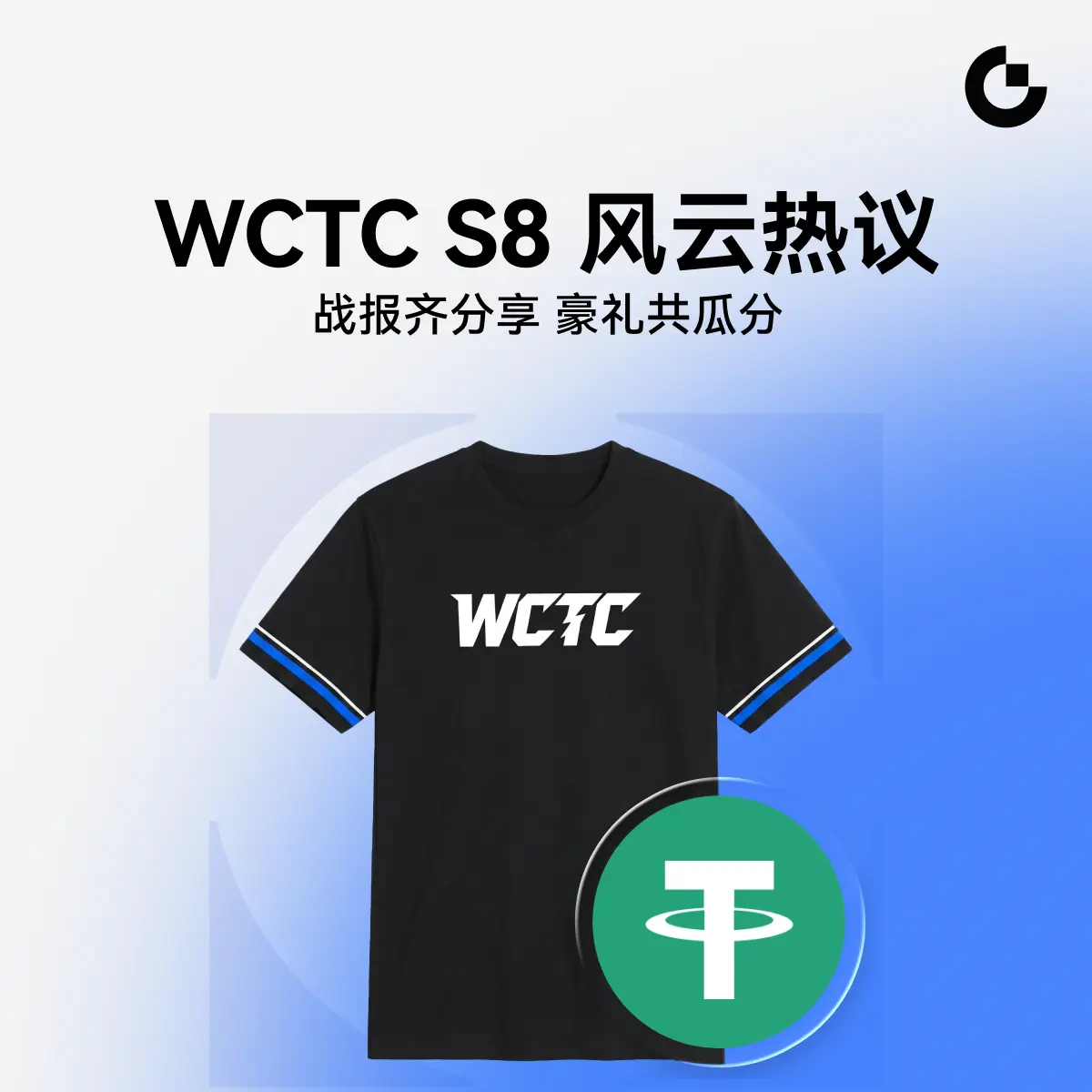
#WCTC交易王PK Gate WCTC S8 Trading PK Competition is in full swing, with low-threshold participation, anonymous 1v1 duels, and multiple reward mechanisms, creating a fairer, more flexible, and more competitive trading event experience for you
💰 Low-threshold participation: Achieve a trading volume of 100 USDT in a single session to join, easily start 1v1 trading duels
🎁 Opportunity to win just by participating: Users who do not enter the Top 100 also have a chance to receive random rewards
📈 Winning streak points system: Win a single match to earn 5–100 points, with additional bonuses fo
View Original
Ryakpanda
#WCTC交易王PK Gate WCTC S8 Trading PK Competition is in full swing, with low-threshold participation, anonymous 1v1 duels, and multiple reward mechanisms, creating a fairer, more flexible, and more competitive trading event experience for you
💰 Low-threshold participation: Trade volume of 100 USDT in a single session to join, easily start 1v1 trading duels
🎁 Opportunity to win just by participating: Users who do not enter the Top 100 also have a chance to receive random rewards
📈 Winning streak points system: Win a single match to earn 5–100 points, with additional bonuses for consecutive wins to help you climb the leaderboard
🏆 High prize pool incentives: Total prize pool up to 1,600,000 USDT, more rewards waiting for you to claim
⏰ 2-hour limited-time duel: Each match lasts only 2 hours, with a fast-paced schedule and more flexible participation
🙈 Anonymous matching mechanism: Fully anonymous 1v1 matching, determined by return rate, showcasing real trading skills
Join now: https://www.gate.com/competition/wctc-s8
repost-content-media
  • Reward
  • 13
  • Repost
  • Share
discovery:
To The Moon 🌕
View More
#Strategy吸筹速度超挖矿两倍 According to publicly available information, as of April 2026, Strategy has been continuously purchasing large amounts of Bitcoin through financing tools such as issuing preferred shares (like STRC). It is estimated that its recent weekly purchase volume can reach 2-3 times the weekly Bitcoin mining output.
The annual new supply of Bitcoin is approximately 18k coins (calculated based on current mining difficulty and block rewards), while Strategy's short-term monthly purchases alone can exceed 10,000 coins. If Strategy continues to accumulate and causes a significant redu
BTC2.63%
View Original
Ryakpanda
#Strategy吸筹速度超挖矿两倍 According to publicly available information, as of April 2026, Strategy has been continuously purchasing Bitcoin on a large scale through financing tools such as issuing preferred shares (like STRC). It is estimated that its recent weekly purchase volume can reach 2-3 times the weekly Bitcoin mining output.
The annual new supply of Bitcoin is approximately 18k coins (based on current mining difficulty and block rewards), while Strategy's short-term monthly purchases alone can exceed 10,000 coins. If Strategy continues to accumulate and causes a significant reduction in freely tradable Bitcoin in the market, and if remaining liquidity is insufficient to support current trading demand, a price revaluation may be triggered. For example, if institutional investors and large holders further lock up their holdings, reducing retail trading space, volatility could increase, pushing prices upward for revaluation.
However, Strategy's accumulation depends on its financing capacity. If Bitcoin prices remain sluggish or market confidence in its financing model declines (e.g., mNAV drops below 1.0x), its accumulation rate may slow down. At this point, if market expectations suggest the supply gap will ease, prices may revalue in advance; conversely, if its financing capacity improves and accumulation continues, expanding the supply gap, the pressure for price revaluation will be greater.
At the same time, changes in regulatory policies and macroeconomic fluctuations (such as rising interest rates and decreasing risk appetite) could impact Bitcoin demand. If external factors lead investors to increase their safe-haven or investment demand for Bitcoin, prices may revalue due to surging demand even if the supply gap has not fully materialized.
In summary, if Bitcoin prices stay above $70,000 and Strategy’s financing capacity remains stable, the supply gap may gradually emerge from the second half of 2026 to early 2027. If market liquidity further tightens at that time, the likelihood of price revaluation increases. However, if Bitcoin prices drop sharply or market confidence collapses, the revaluation could occur earlier or be delayed; the specific timing depends on real-time market data and Strategy’s financing dynamics.
repost-content-media
  • Reward
  • 16
  • Repost
  • Share
discovery:
To The Moon 🌕
View More
#加密市场观察 Fidelity: Multiple indicators are showing early signs of stability, with Bitcoin bottoming out in preparation for the "next major upward wave"
On April 28th, according to Fidelity Digital Assets' "Q2 2026 Signal Report," although the cryptocurrency market is in a consolidation phase, multiple indicators are showing early signs of stability. The report states that Bitcoin remains the "anchor" of the market, with funds continuously flowing into this most liquid asset, its market cap share and unrealized profit levels reflecting relative resilience amid volatile conditions.
Fidelity
BTC2.63%
ETH1.97%
SOL1.22%
View Original
Ryakpanda
#加密市场观察 Fidelity: Multiple indicators are showing early signs of stability, with Bitcoin bottoming out in preparation for the "next major upward wave"
On April 28, according to Fidelity Digital Assets' "Q2 2026 Signal Report," although the cryptocurrency market is in a consolidation phase, several indicators are signaling early stability. The report states that Bitcoin remains the market's "anchor," with funds continuously flowing into this most liquid asset, its market capitalization share and unrealized profits reflecting relative resilience amid volatile conditions.
Fidelity analysts said that the overall market momentum and profitability indicators are consistent with "correction phase" characteristics, potentially paving the way for a more stable market structure. The report also notes a divergence between on-chain activity and price trends for Ethereum and Solana, with network usage demand remaining strong, indicating that demand at the protocol layer has not weakened.
Previously, Jurrien Timmer, head of Fidelity's global macro strategy, also expressed optimism about Bitcoin, believing that Bitcoin is rebounding from a low of $60,000 and establishing a new base near $78,000, preparing for the "next major upward wave." Fidelity also observed that funds are rotating back from gold into Bitcoin ETPs, reversing the trend seen at the end of 2025.
repost-content-media
  • Reward
  • 18
  • Repost
  • Share
discovery:
LFG 🔥
View More
I have joined WCTC S8, participate now and share in 8,000,000 USDT, open the door to trading, and conquer the future battlefield! https://www.gate.com/zh/competition/wctc-s8?page=teamCompetition&ref=BFNNXV5X&ref_type=165&teamId=52748&utm_cmp=qK2FsaYI
View Original
post-image
  • Reward
  • 10
  • Repost
  • Share
MasterChuTheOldDemonMasterChu:
Just charge forward 👊
View More
#WCTC交易王PK Attention all partners participating in the WCTC competition, a complete trading strategy is here for you. Take what you need😃😃😃
Strategy A: Conservative Income Strategy (Recommended)
Core Logic: Diversify risk across multiple asset classes, steadily accumulate trading volume and profits
Operational Points:
1 Asset Allocation: 60% mainstream coins (BTC/ETH) + 30% stablecoins for financial management + 10% TradFi assets (gold/foreign exchange)
2 Trading Frequency: Maintain a certain trading volume daily, avoid large one-off trades
3 Risk Control Settings: Stop loss per trade at
BTC2.63%
ETH1.97%
View Original
Ryakpanda
#WCTC交易王PK Attention all partners participating in the WCTC competition, here is a complete trading strategy for you. Feel free to take what you need 😃😃😃
Strategy A: Conservative Income-Oriented (Recommended)
Core Logic: Diversify risk across multiple asset classes, steadily accumulate trading volume and returns
Operational Points:
1 Asset Allocation: 60% mainstream coins (BTC/ETH) + 30% stablecoins for financial management + 10% TradFi assets (gold/foreign exchange)
2 Trading Frequency: Maintain a certain trading volume daily, avoid large one-time trades
3 Risk Control Settings: Stop loss per trade at 3-5%, overall drawdown controlled within 10%
Advantages: Risk is controllable, returns are stable, suitable for your financial management background
Strategy B: High-Frequency Trading
Core Logic: Quickly accumulate trading volume through contracts and flash swaps
Operational Points:
1 Focus on Contracts: Use leverage to amplify trading volume (be careful with position sizing)
2 Intraday Swing: 5-15 minute level swing trading on BTC/ETH
3 TradFi Arbitrage: Arbitrage of price differences between gold, foreign exchange, and traditional markets
Risk Reminder: Requires strong technical analysis skills and quick reactions, not suitable for beginners
Strategy C: Hybrid Optimization
Core Logic: Participate in all three tracks simultaneously to maximize winning probability
Allocation Suggestions:
70% of funds for personal contests (conservative strategy)
20% of funds for PK contests (short-term opportunities)
10% of funds for team contributions (if applicable)
Key Skills and Precautions
1 Trading Volume Accumulation Tips
Multi-asset rotation: Don’t rely on a single coin, diversify into spot + contracts + TradFi
Stablecoin pairs: USDT trading pairs count towards volume and tend to be less volatile
TradFi bonus: Gold (XAU), foreign exchange, and other traditional assets may have less competition
2 Maximize Returns
Monitor dynamic prize pools: More participants unlock higher pools
Complete tasks: Blind box chests, live stream lotteries, and other extra rewards—don’t miss out
Fee Optimization: VIP1 level—pay attention to how fees impact your returns
3 Risk Management
Avoid excessive leverage: The contest isn’t gambling; preserving principal is key to ongoing participation
Set Stop Loss: Each trade must have a clear stop loss point
Diversify Investments: Don’t put all your funds into a single track
4 Time Planning
21 days remaining: First 2/3 for steady accumulation, last week adjust strategy based on ranking
Daily Review: Record trading data and optimize strategies
Wishing all partners excellent results 🎉🎉🎉🎉🎉
repost-content-media
  • Reward
  • 19
  • Repost
  • Share
MasterChuTheOldDemonMasterChu:
Just charge forward 👊
View More
#$DOGE Dogecoin advances into the mainstream market, facilitating its listing on European ETF exchanges
Although the influence of the Dogecoin ETF may not be as significant as that of Bitcoin and Ethereum ETFs, it remains one of the most milestone achievements in the cryptocurrency field this year.
With the strong momentum of the ETF market, the Dogecoin ETF has just reached an important milestone, which could boost market demand for these newly launched investment products. Dogecoin investment products debut on major European exchanges
Another milestone in the mainstream cryptocurrency adopti
DOGE2.08%
BTC2.63%
ETH1.97%
View Original
Ryakpanda
#$DOGE Dogecoin enters the mainstream market, facilitating its listing on European ETF exchanges
Although the influence of the Dogecoin ETF may not be as significant as that of Bitcoin and Ethereum ETFs, it remains one of the most milestone achievements in the cryptocurrency field this year.
With the strong momentum of the ETF market development, the Dogecoin ETF has just reached an important milestone, which could boost market demand for these newly launched investment products. Dogecoin investment products debut on major European exchanges
Another milestone in the mainstream cryptocurrency adoption process is forming, and this time the focus is on Dogecoin—the largest meme coin on the market. The Dogecoin Exchange-Traded Fund (ETF) has achieved another milestone, gaining a larger market share globally.
In response to the increasing demand for ETFs, 21Shares’ Dogecoin ETP has been listed on Xetra, Europe's largest ETF exchange. This listing is an important step in making Dogecoin more accessible to institutional investors, transforming it from a retail-dominated asset into a more participatory investment product alongside mainstream assets like Bitcoin and Ethereum.
According to a report by 21Shares, the Dogecoin ETP launched on the Xetra platform provides European investors with a 100% physically-backed channel, allowing them to invest in one of the most well-known “meme coins” in cryptocurrency history. This move connects traditional finance with the cryptocurrency market, indicating that within a regulatory framework, investor demand for diversified digital asset investments is growing. As a large influx of new funds is expected to flow into the Dogecoin ETP, this surge in demand could have a crucial impact on Dogecoin’s price trends in both the short and long term.
This news has sparked lively discussion within the Dogecoin community, and analysts are optimistic about this milestone event. At this moment, Dogecoin spot ETFs are experiencing slow but steady growth with almost no capital inflow. As the product targets new investor groups across Europe, demand for the Dogecoin ETF may gradually rebound and be driven again by the meme coin craze. Another factor that could stimulate product demand is the decisions by the U.S. Securities and Exchange Commission (SEC) and the Commodity Futures Trading Commission (CFTC) regarding meme coins and other major assets in the crypto space. These two regulators recently classified Dogecoin (DOGE) along with 16 other cryptocurrencies as digital commodities, reducing friction and uncertainty around meme coin regulation. This classification will change the perception of Dogecoin in the crypto and financial sectors. Consequently, more institutional investors and new financial products may flood into the Dogecoin market.
Dogecoin shows strength relative to Bitcoin
As the market slowly recovers, cryptocurrency analyst Trader Tardigrade has conducted an in-depth study of Dogecoin and Bitcoin performance. After analyzing the 1-hour chart, the expert pointed out that the lower time frame (LTF) shows typical signs of relative strength divergence (RSD). For Dogecoin (DOGE), this meme coin is currently hitting new highs, indicating strong potential upward momentum. Meanwhile, Bitcoin has started to decline after retesting previous highs. Trader Tardigrade stated that this pattern usually signals market rotation and that new liquidity will flow into Dogecoin. Therefore, as Bitcoin’s price consolidates sideways, Dogecoin has become the focus of market attention.
repost-content-media
  • Reward
  • 12
  • Repost
  • Share
HighAmbition:
Steadfast HODL💎
View More
  • Pin